HOOPER-RENWICK LIBRARY
HOOPER-RENWICK LIBRARY
Gwinnett County Public Library
Gwinnett County Public Library
Reimagining a Historic School as a Modern Community Library
Once a segregated school for Black students in Lawrenceville, Georgia, the Hooper-Renwick Library has been thoughtfully transformed into a vibrant cultural and community hub. Housed within the original 1940s school building—the only facility that served African-American students from across Gwinnett County until desegregation in the late 1960s—the building has been reimagined not just as a library, but as a living archive. Through preserved architecture, engaging exhibits, artifacts, firsthand stories, and interactive displays, the library honors the legacy of those who learned, endured, and overcame within its walls, offering visitors a powerful glimpse into the lives of past students, teachers, and the broader African-American community.
SIZE
11,475 SF Renovation of 1940’s building
15,852 SF New Additions
27,327 SF Total
CONSTRUCTION COST
$15,000,000.00 ($548/SF)
CM at Risk
FUNDING
SPLOST
OCCUPANCY DATE
June 2025
SHELVING CAPACITY
42,000
PUBLICATIONS
Urban Libraries Council Top Innovator
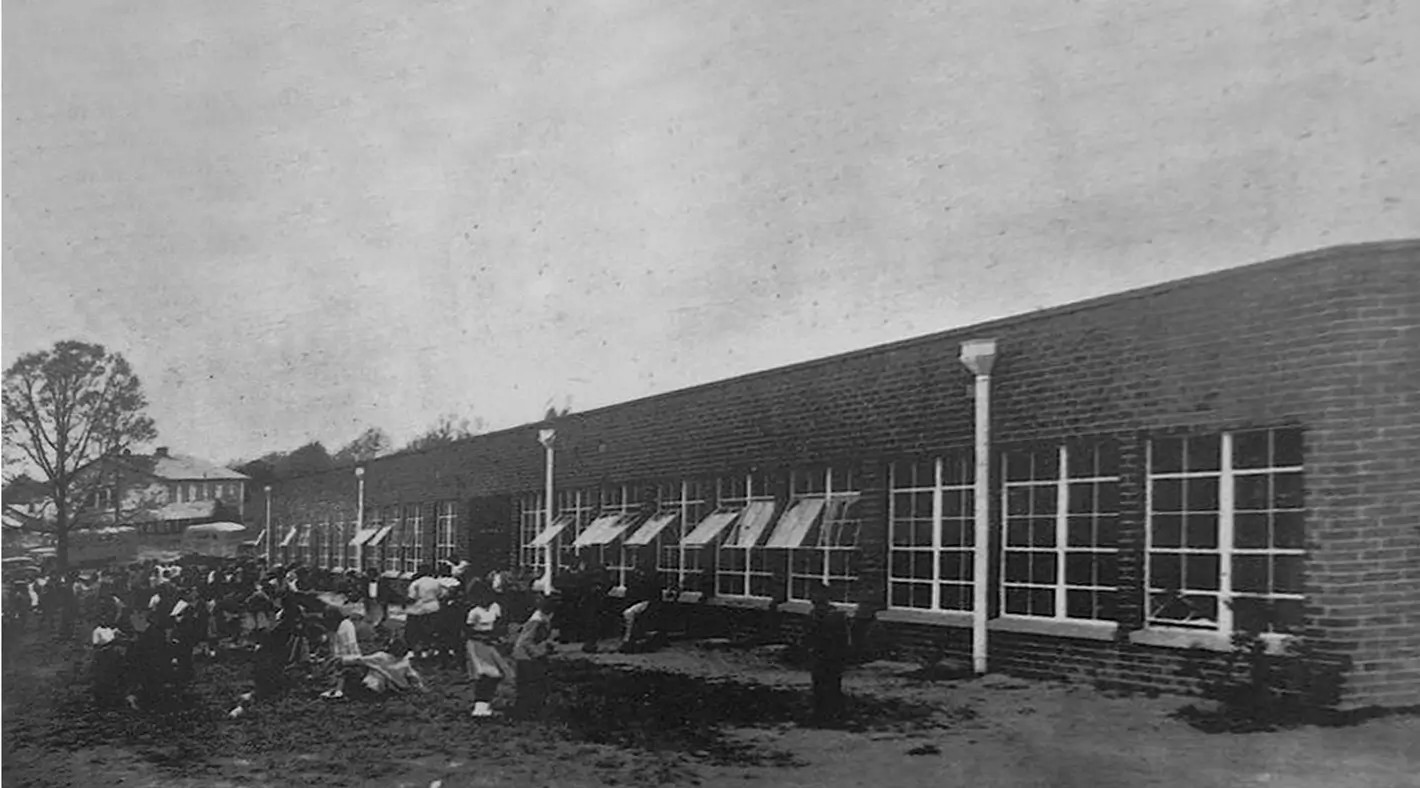
1950’s

New library

Under construction
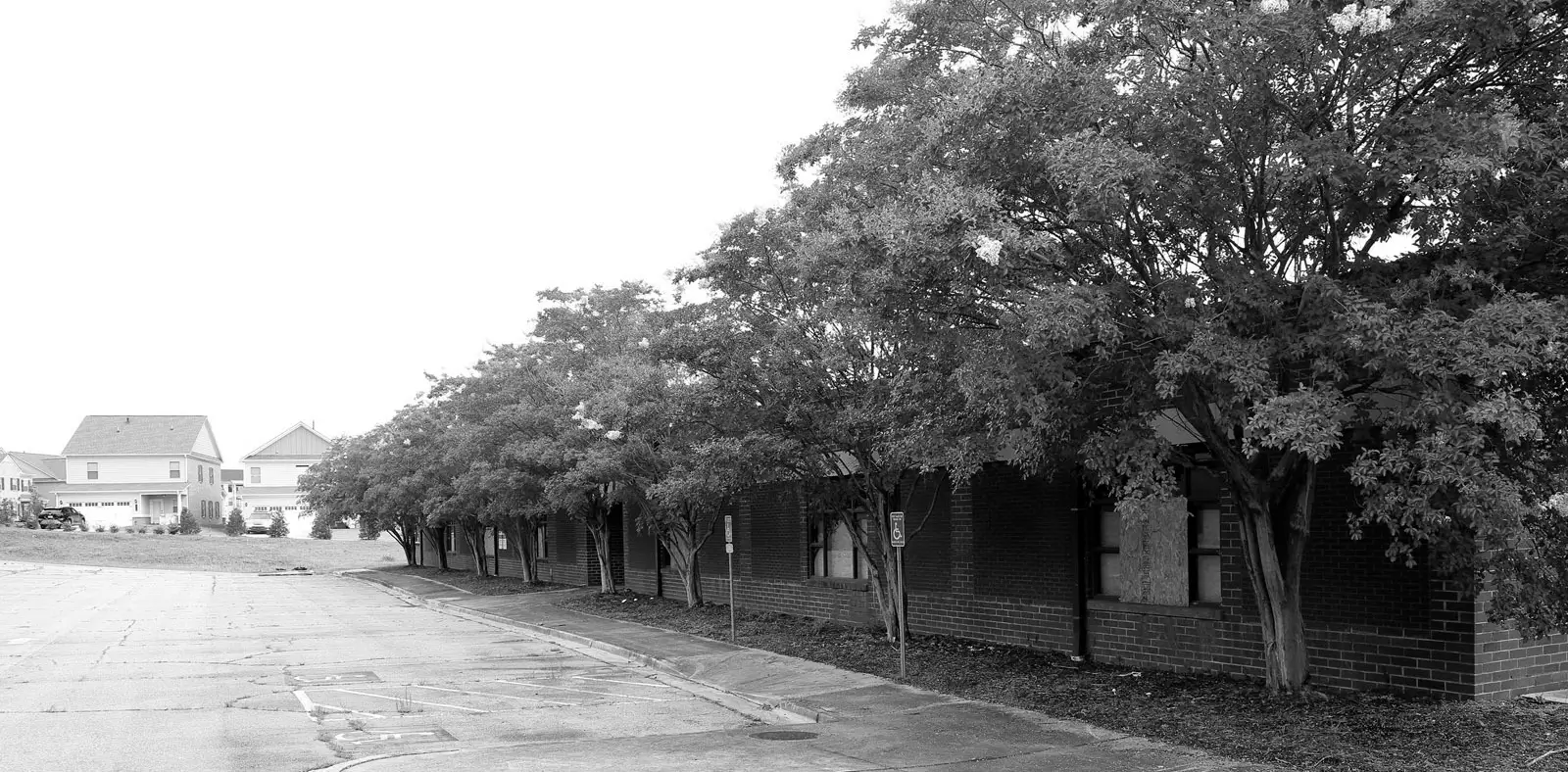
Before

Roof top exterior programming space
The fabric of place: a color language of legacy
The exterior library design draws inspiration from Kente cloth, with panels in orange, yellow, brown, and burgundy—each color reflecting a part of our shared past and future. Framed in the architect’s signature powder blue, the design symbolizes protection, grounding, and upliftment, mirroring the community it serves.
Color symbolism
Orange: vitality and celebration
Yellow: warmth and enlightenment
Brown: grounding and resilience
Burgundy: strength and legacy
Powder Blue: peace and aspiration

Uplifted by design
The signature butterfly roof reaches upward, symbolizing elevation of spirit, history, and future while capturing and drawing in natural light. Beneath it, canopy lights form a constellation, honoring those who dreamed beyond their circumstances. Extending this idea, the roof supports an open-air terrace for gathering, learning, and reflection—reinforcing the library’s mission to elevate, connect, and inspire the community.
Landscapes of injustice
The sunken landscaping within the planters symbolizes the uneven playing field that Black Americans have historically faced. By lowering the ground plane, the design speaks to how Black communities have been systemically held back and marginalized. The architect, a former student of Peter Eisenman, drew inspiration from Eisenman’s use of manipulated ground in projects like the Memorial to the Murdered Jews of Europe in Berlin, where shifts in elevation evoke disorientation, absence, and memory. Similarly, the recessed planters at Hooper-Renwick offer a subtle but powerful commentary on injustice, while the living plant life within them represents resilience, growth, and the quiet strength of a community that has endured.

Sunken planters
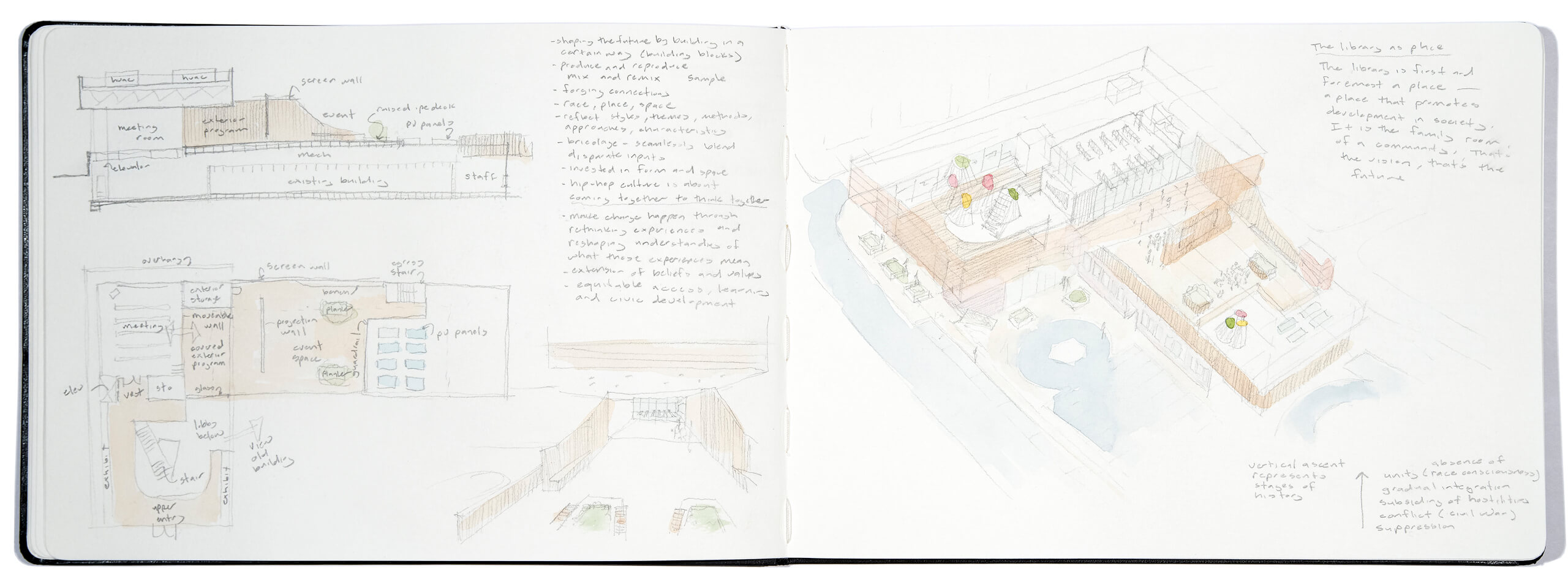
Early sketches
Design Concept: The Library as a Living Framework
The Hooper-Renwick Library is conceived as a framework for the future—adaptive, layered, and rooted in collective memory. Drawing from hip-hop principles of mixing, remixing, and sampling, the design weaves history, culture, and contemporary life into a cohesive architectural bricolage that connects race, place, and community.
The Within the exhibit, history is conveyed through vertical movement, with each level representing stages of unity, integration, conflict, resilience, and the ongoing pursuit of equity. The journey begins on the ground floor, a dark, windowless space painted black to represent segregation, where displays are fragmented, angled, and devoid of color. A narrow central stair with tall enclosing walls marks the transition upward, gradually widening and opening as the walls lower, symbolizing progress and change. The second-floor exhibit reflects the period after integration, filled with natural light, white walls and fixtures, and accented by color in the guardrail and a multicolored central wood feature, signaling growth, diversity, and hope.
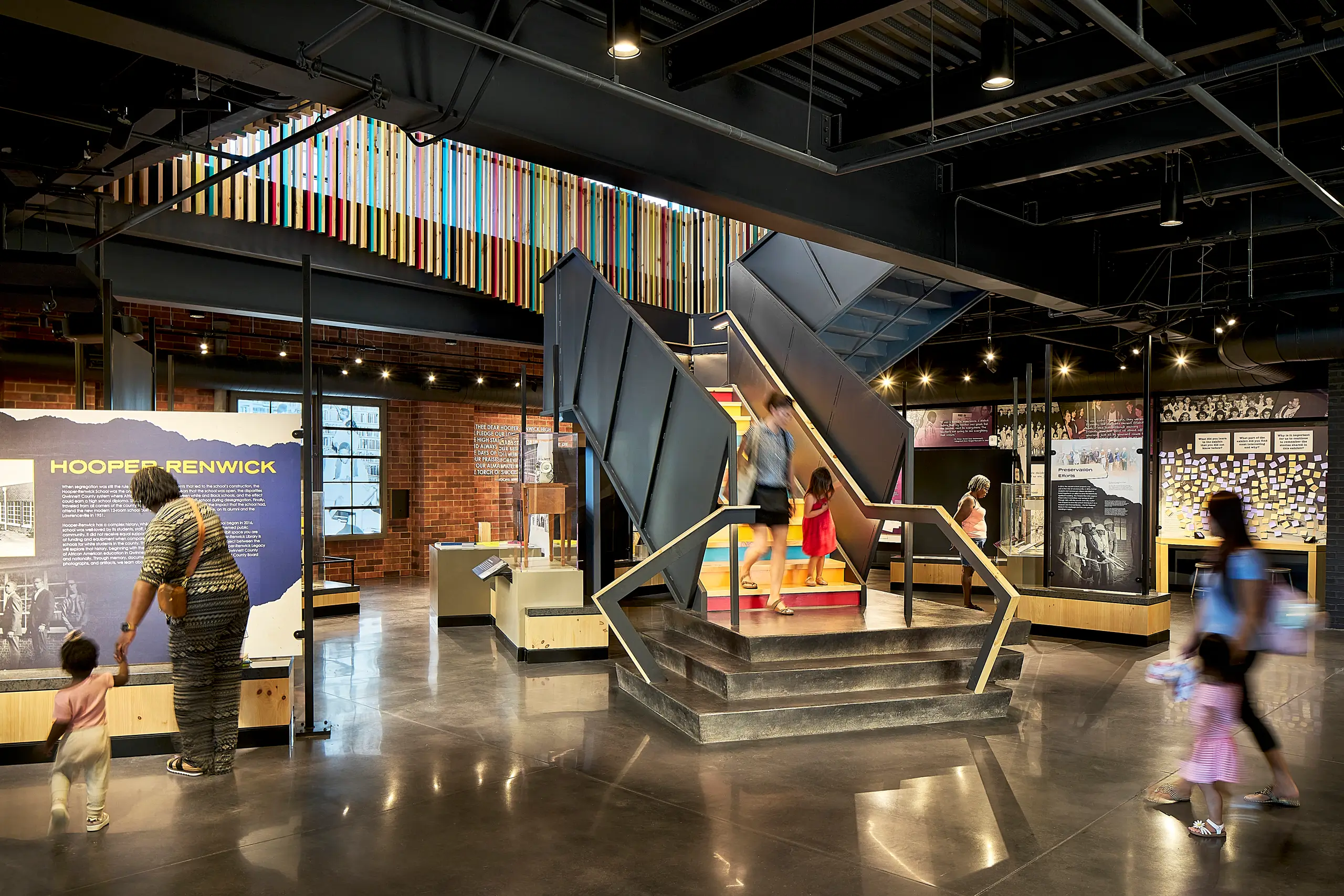
Ground floor exhibit

Connecting stair
From shadows to light
The exhibit uses immersive storytelling to honor the experiences of African American students, educators, and families within the Gwinnett community. The architecture reflects the emotional journey through segregation, desegregation and to today. Visitors begin on the ground floor, where a dark, cavernous space with angled panels evokes the disorientation of the era of segregation.
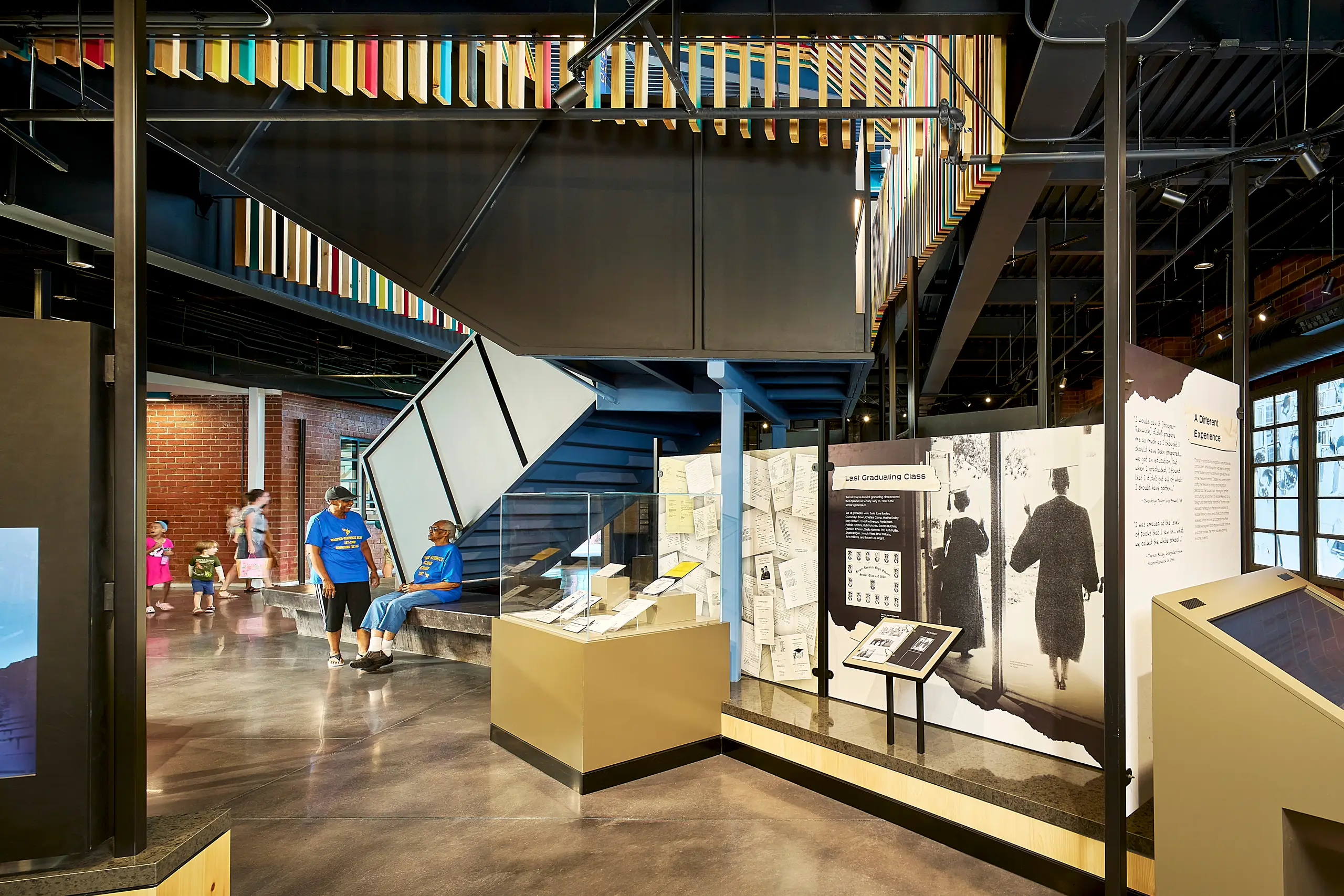
Ground floor exhibit
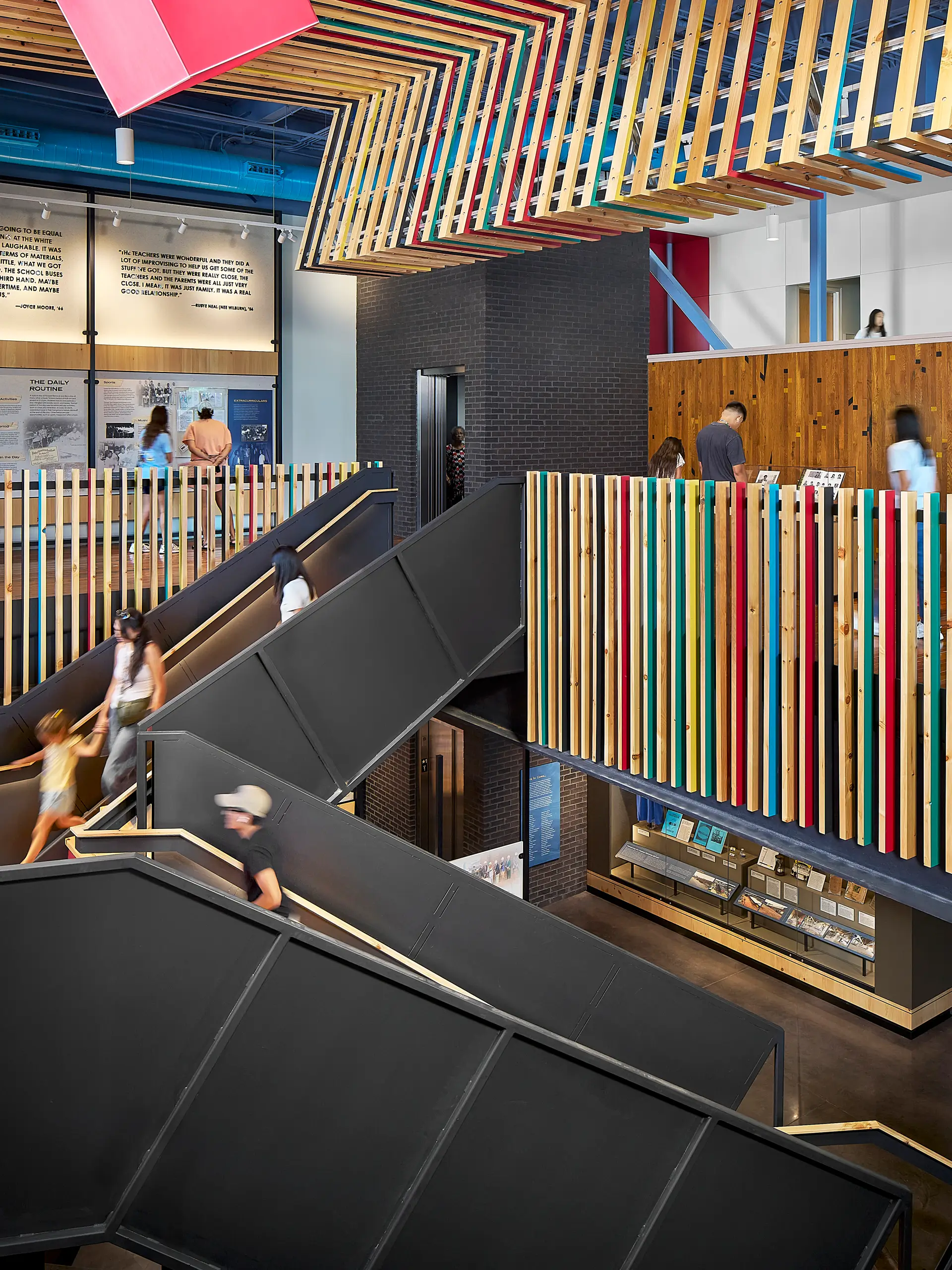
Connecting stair
Compression and release
A narrow staircase with high guardrails (compressing) guides patrons upward, gradually widening and opening (expanding)—symbolizing the elevating path toward desegregation. On the upper floor, natural light fills a bright, open gallery. Multicolored railings and ceilings represent hope and progress, while the repurposed original gym floor grounds the space in its history—connecting past and present in a vision of inclusion and resilience.
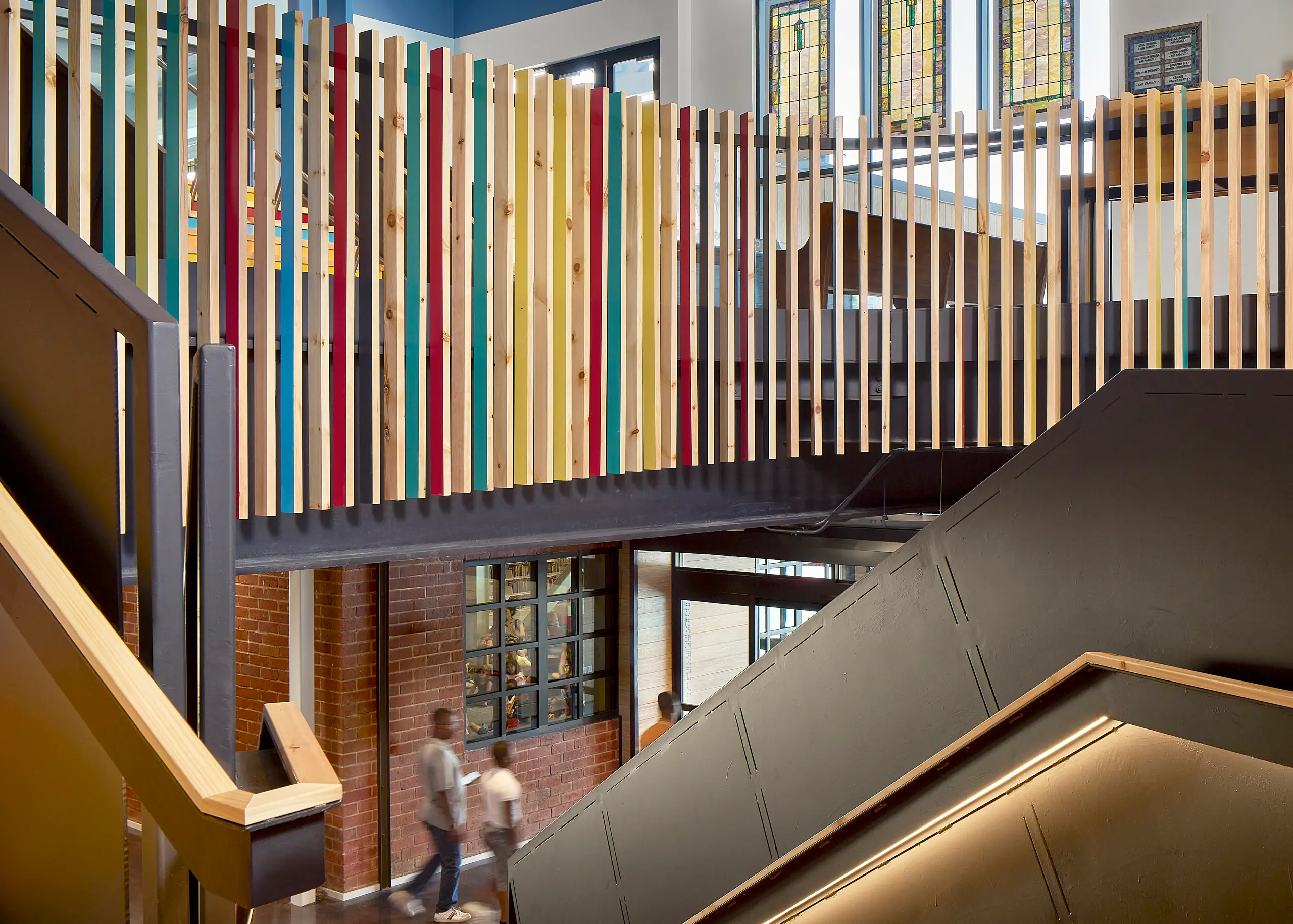
Connecting stair

Upper level of exhibit with wood slat crown and reused old gym flooring.
“Rather than engaging at a distinct moment in time, library designers are seeking deeper, ongoing community connections to inform not only physical spaces but programs and amenities offered within. The Hooper-Renwick Library renovated and expanded a historic African American schoolhouse with modern library services and a permanent exhibit reflecting the building’s evolution. The revitalized structure celebrates a legacy of resilience, while actively writing a new chapter of community growth.”
- Library Journal

Architect's notebook studies
Where history rises
The Exhibit Gallery elevates Jean-Michel Basquiat’s iconic crown—literally and symbolically—framed by twin skylights with jewel-toned accents. A ceiling of knotty pine slats forms a warm canopy, softening the room and creating an intimate, contemplative space.
Preserved elements, like the original gym floor, still bearing the old basketball lines, ground the gallery in its history while reframing it for a new generation. Once a site of segregation, the space now stands as a beacon of inclusion and creativity—where memory and modernity converge, and history becomes a foundation for imagination and possibility.
Crowned in color
Inspired by Jean-Michel Basquiat, the Teen Space is transformed into an immersive canvas of color, texture, and energy. His iconic crown emerges as a symbol of Black excellence, self-worth, and creative power—boldly affirming: you are powerful, you belong, you are seen. Here, art and identity intersect, and the space becomes a living canvas, activated by teens as they explore voice, imagination, and possibility.
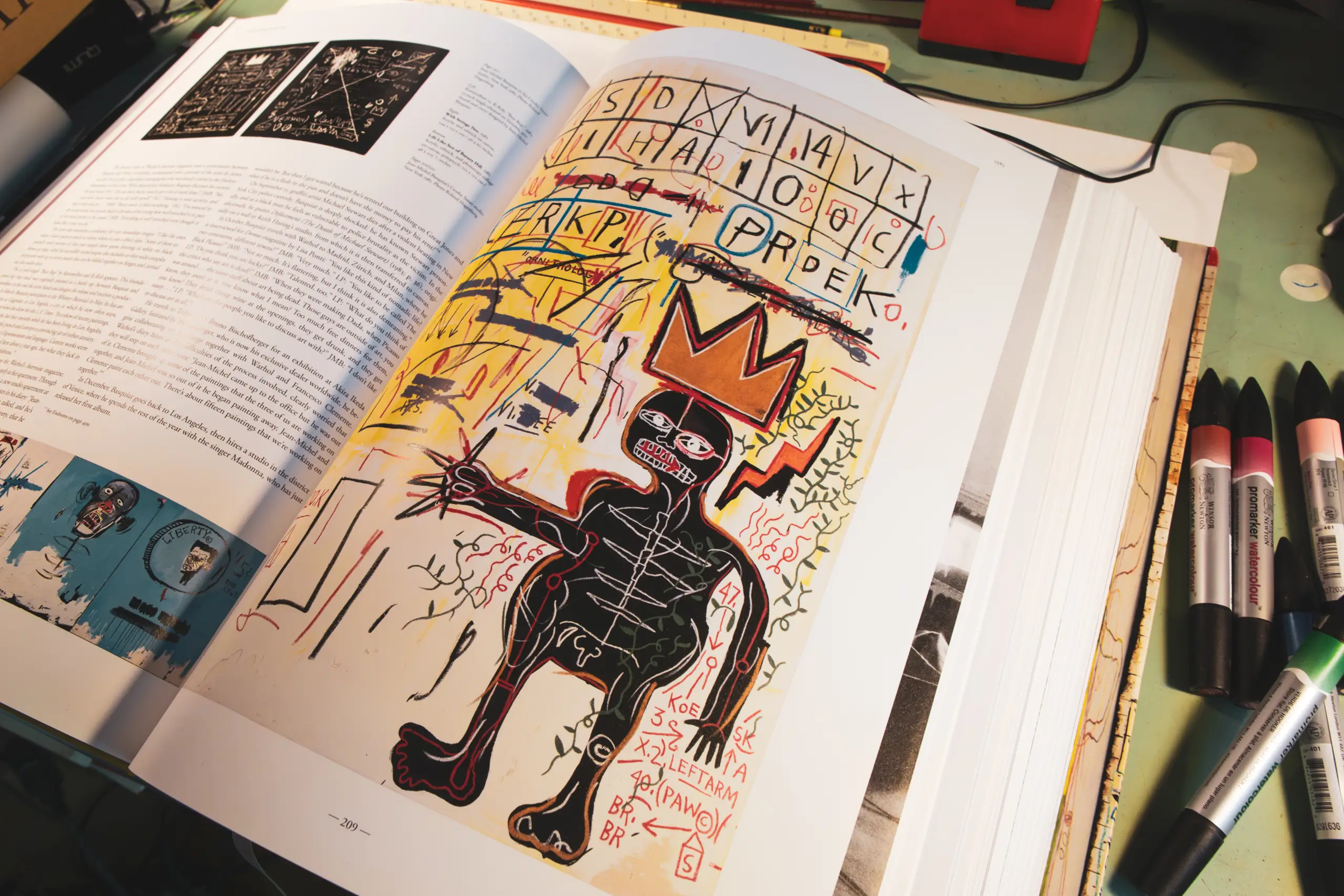
Jean-Michel Basquiat’s crown
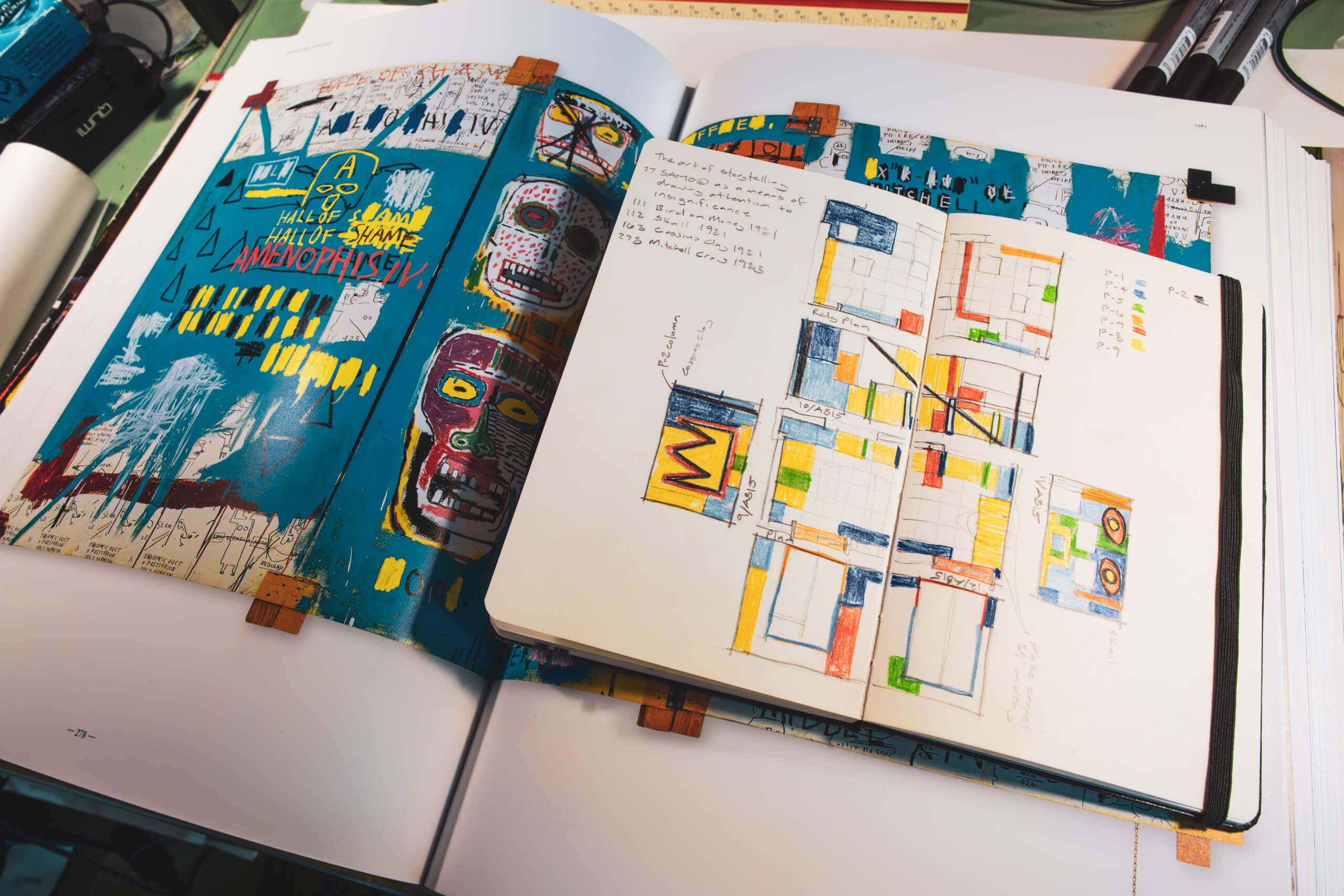
Architect's notebook studies
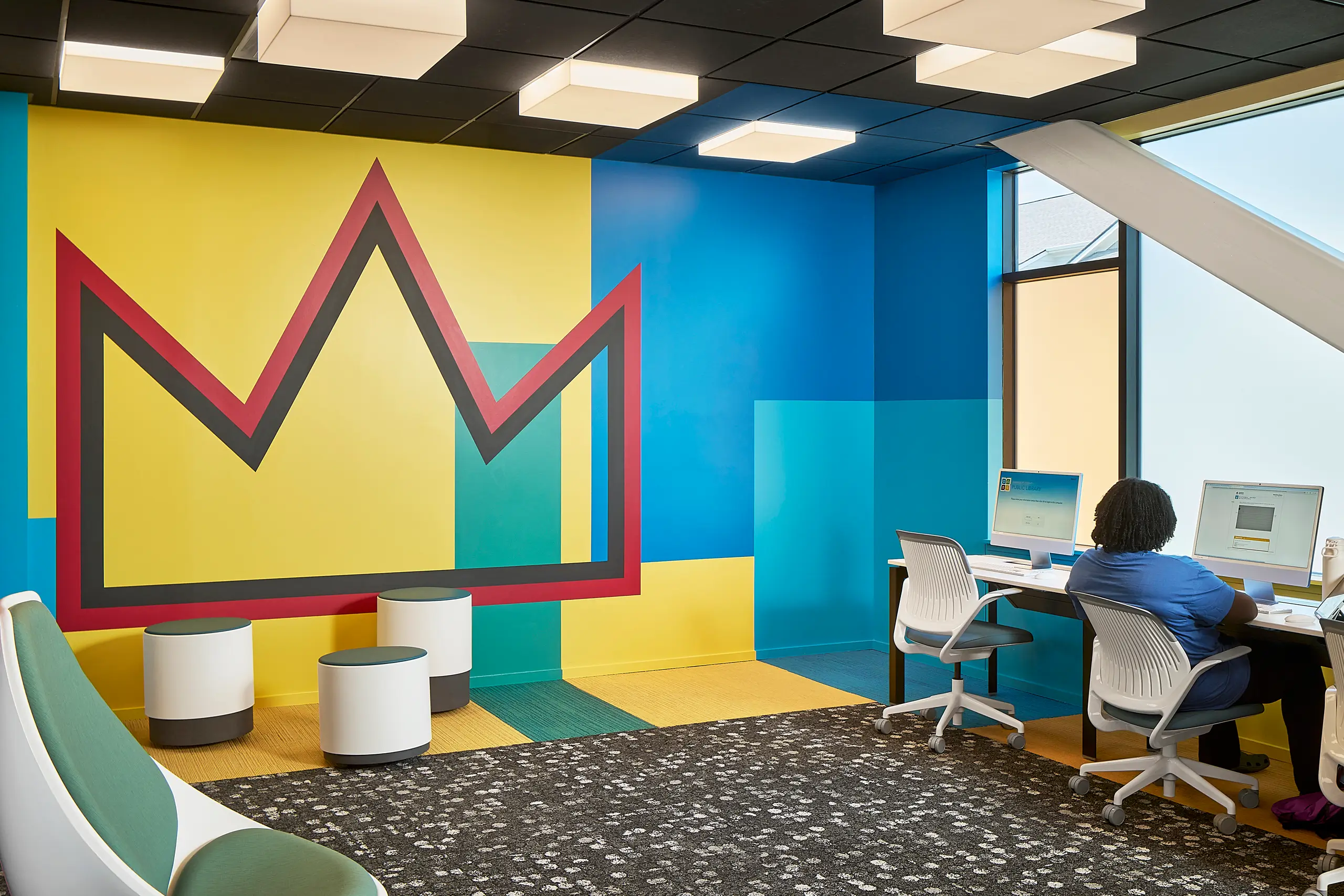
Teen space
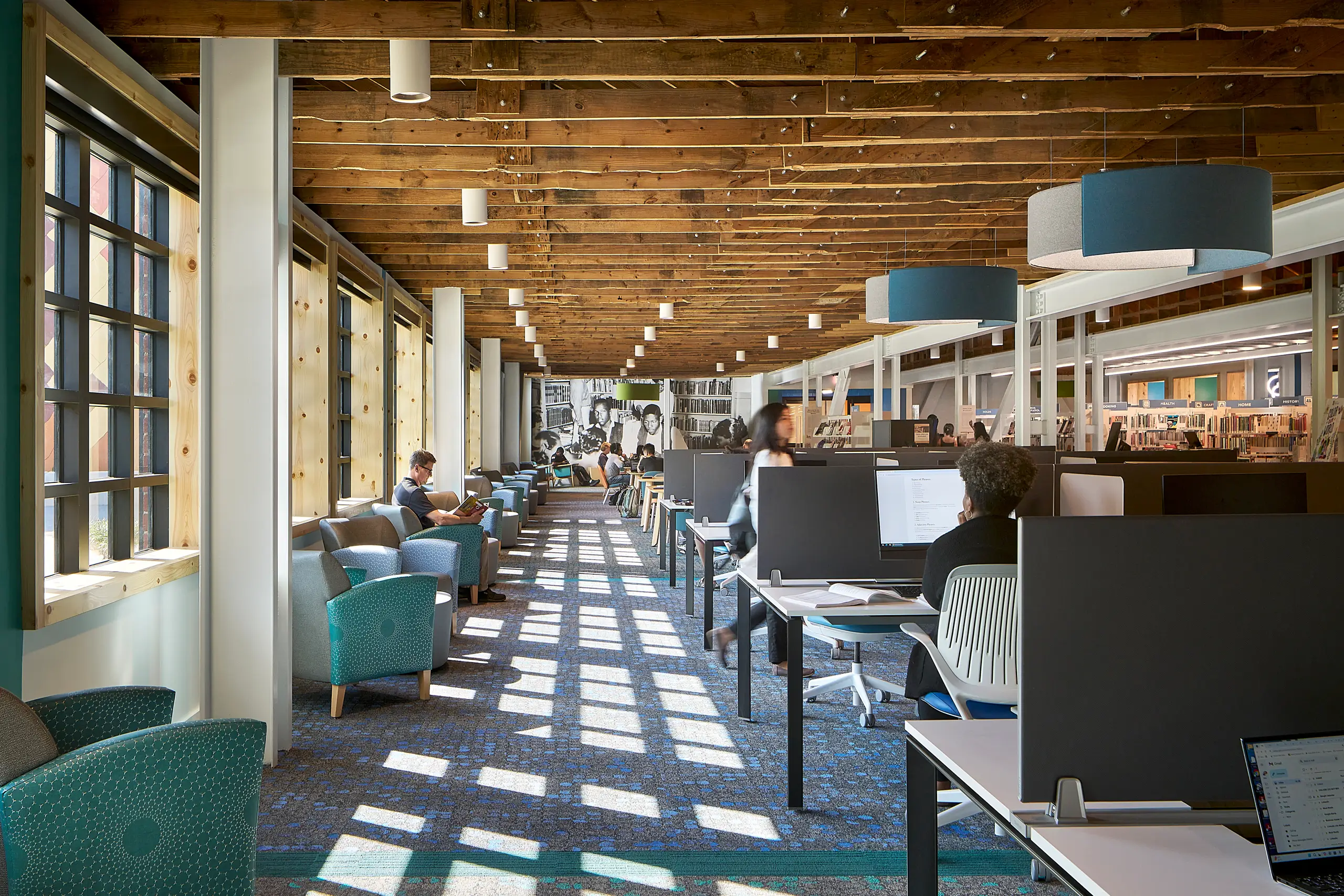
Adult Area looking West
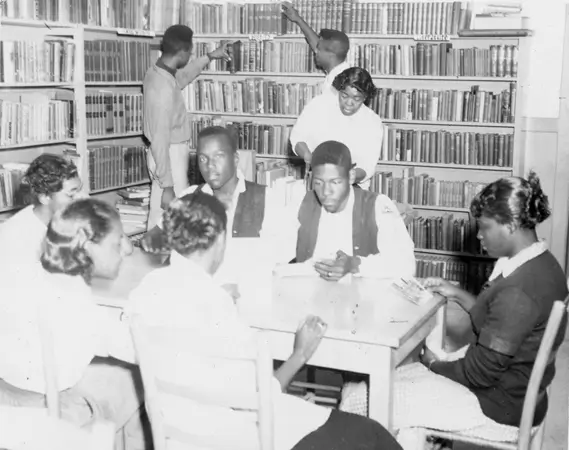
A group of Hooper-Renwick students in the school's library, 1953 Gwinnett Historic Society
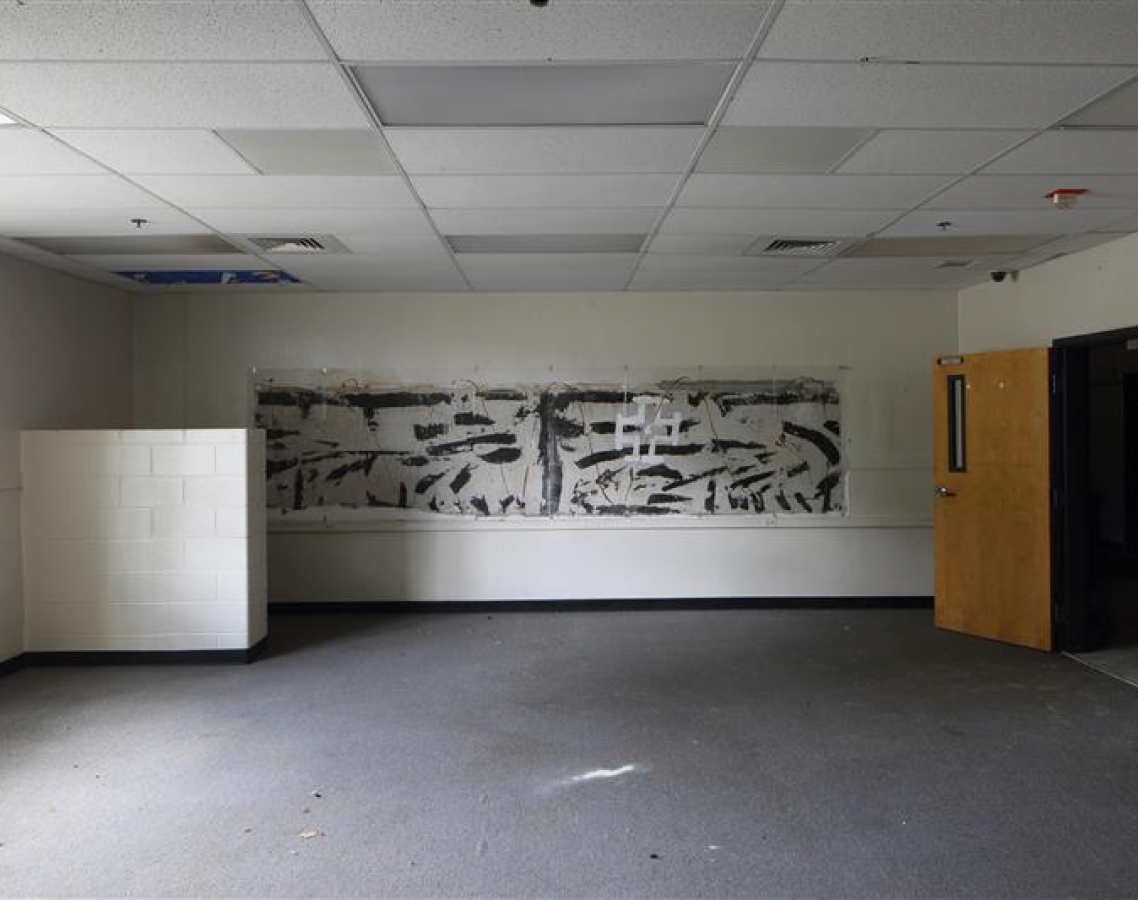
Before
The architecture of memory: color, culture and continuity
The open floor plan of the library quietly honors its history: vibrant carpet stripes mark the location of former classroom walls, while exposed double-channel columns outline their past locations through the spaces between—making memory visible through architecture. Restored windows along the south façade and north side now illuminate quiet study rooms, learning labs, and a teen area, all framed by warm, knotty pine portals that invite connection and reflection.
The exposed original pine ceiling, marked with saw cuts and nail holes, proudly retains its unstained, dark patina—crafted by the local Black community. It stands as a living artifact, inviting a powerful dialogue between past and present, honoring the hands that built it while embracing the possibilities of what’s to come.
Adult Area looking East
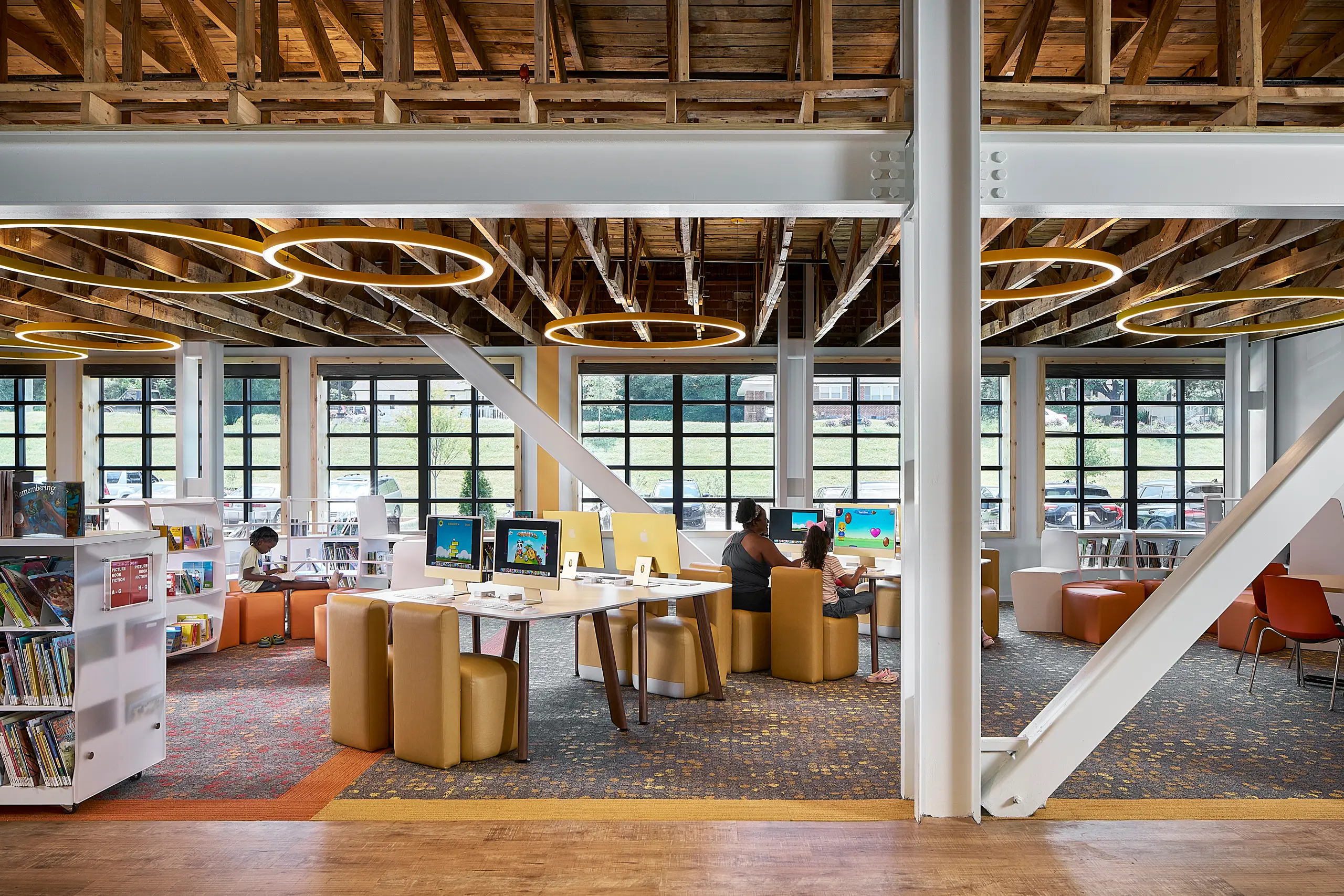
Children's Area
The architecture of memory: color, culture and continuity
Color and form shape every experience. In the children’s area, warm oranges and yellows infuse the space with energy, sparking creativity and a sense of joyful discovery.
The architecture carries deeper meaning. Deliberate misalignments between structure and windows reflect the destabilizing effects of segregation, while framed views and diagonal steel braces create moments of clarity and connection—honoring a fractured past while guiding visitors toward a more open, inclusive future.
Echoes of light and memory
Adult spaces shift to cooler tones—soft blues, muted greens, and calming grays—creating an atmosphere of focus, tranquility, and reflection. This thoughtful palette supports reading and study while maintaining a cohesive, emotionally resonant environment.
A bold blue stripe traces the former classroom walls, wrapping from floor to wall as a subtle marker of history. Restored classroom windows flood the space with natural light, reconnecting past and present.
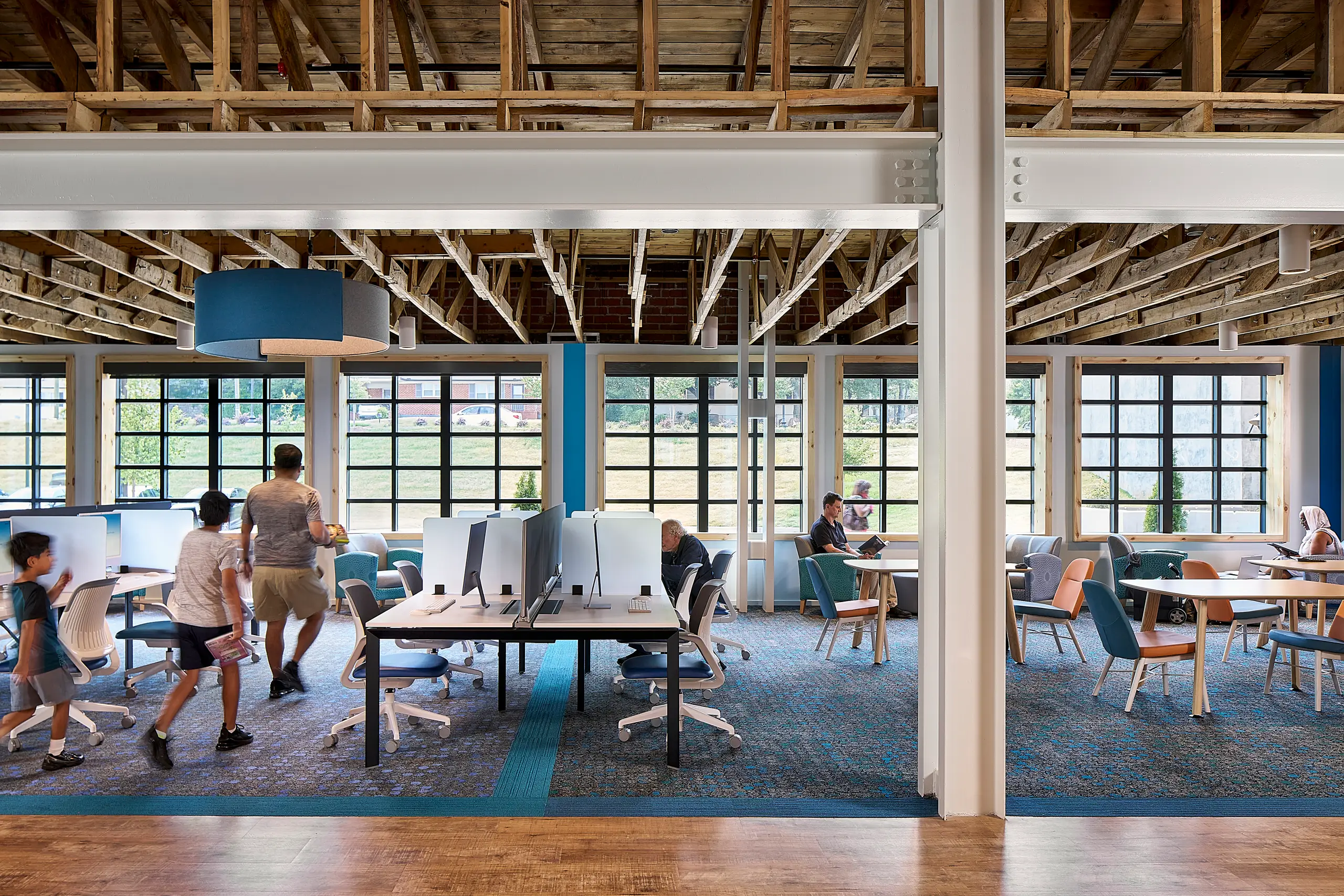
Adult Area

Under Construction

Steel and story
The steel framework supports the renovated spaces while respecting the building’s original architecture, bridging past and present in the transformation.

Under Construction

Under Construction
1950’s
New library
Under construction
Before
Roof top exterior programming space
The fabric of place: a color language of legacy
The exterior library design draws inspiration from Kente cloth, with panels in orange, yellow, brown, and burgundy—each color reflecting a part of our shared past and future. Framed in the architect’s signature powder blue, the design symbolizes protection, grounding, and upliftment, mirroring the community it serves.
Color symbolism
Orange: vitality and celebration
Yellow: warmth and enlightenment
Brown: grounding and resilience
Burgundy: strength and legacy
Powder Blue: peace and aspiration
Uplifted by design
The signature butterfly roof reaches upward, symbolizing elevation of spirit, history, and future while capturing and drawing in natural light. Beneath it, canopy lights form a constellation, honoring those who dreamed beyond their circumstances. Extending this idea, the roof supports an open-air terrace for gathering, learning, and reflection—reinforcing the library’s mission to elevate, connect, and inspire the community.
Landscapes of injustice
The sunken landscaping within the planters symbolizes the uneven playing field that Black Americans have historically faced. By lowering the ground plane, the design speaks to how Black communities have been systemically held back and marginalized. The architect, a former student of Peter Eisenman, drew inspiration from Eisenman’s use of manipulated ground in projects like the Memorial to the Murdered Jews of Europe in Berlin, where shifts in elevation evoke disorientation, absence, and memory. Similarly, the recessed planters at Hooper-Renwick offer a subtle but powerful commentary on injustice, while the living plant life within them represents resilience, growth, and the quiet strength of a community that has endured.
Sunken planters
Early sketches
Design Concept: The Library as a Living Framework
The Hooper-Renwick Library is conceived as a framework for the future—adaptive, layered, and rooted in collective memory. Drawing from hip-hop principles of mixing, remixing, and sampling, the design weaves history, culture, and contemporary life into a cohesive architectural bricolage that connects race, place, and community.
The Within the exhibit, history is conveyed through vertical movement, with each level representing stages of unity, integration, conflict, resilience, and the ongoing pursuit of equity. The journey begins on the ground floor, a dark, windowless space painted black to represent segregation, where displays are fragmented, angled, and devoid of color. A narrow central stair with tall enclosing walls marks the transition upward, gradually widening and opening as the walls lower, symbolizing progress and change. The second-floor exhibit reflects the period after integration, filled with natural light, white walls and fixtures, and accented by color in the guardrail and a multicolored central wood feature, signaling growth, diversity, and hope.
Ground floor exhibit
Connecting stair
From shadows to light
The exhibit uses immersive storytelling to honor the experiences of African American students, educators, and families within the Gwinnett community. The architecture reflects the emotional journey through segregation, desegregation and to today. Visitors begin on the ground floor, where a dark, cavernous space with angled panels evokes the disorientation of the era of segregation.
Ground floor exhibit
Connecting stair
Compression and release
A narrow staircase with high guardrails (compressing) guides patrons upward, gradually widening and opening (expanding)—symbolizing the elevating path toward desegregation. On the upper floor, natural light fills a bright, open gallery. Multicolored railings and ceilings represent hope and progress, while the repurposed original gym floor grounds the space in its history—connecting past and present in a vision of inclusion and resilience.
Connecting stair
Upper level of exhibit with wood slat crown and reused old gym flooring.
“Rather than engaging at a distinct moment in time, library designers are seeking deeper, ongoing community connections to inform not only physical spaces but programs and amenities offered within. The Hooper-Renwick Library renovated and expanded a historic African American schoolhouse with modern library services and a permanent exhibit reflecting the building’s evolution. The revitalized structure celebrates a legacy of resilience, while actively writing a new chapter of community growth.”
- Library Journal
Architect's notebook studies
Where history rises
The Exhibit Gallery elevates Jean-Michel Basquiat’s iconic crown—literally and symbolically—framed by twin skylights with jewel-toned accents. A ceiling of knotty pine slats forms a warm canopy, softening the room and creating an intimate, contemplative space.
Preserved elements, like the original gym floor, still bearing the old basketball lines, ground the gallery in its history while reframing it for a new generation. Once a site of segregation, the space now stands as a beacon of inclusion and creativity—where memory and modernity converge, and history becomes a foundation for imagination and possibility.
Crowned in color
Inspired by Jean-Michel Basquiat, the Teen Space is transformed into an immersive canvas of color, texture, and energy. His iconic crown emerges as a symbol of Black excellence, self-worth, and creative power—boldly affirming: you are powerful, you belong, you are seen. Here, art and identity intersect, and the space becomes a living canvas, activated by teens as they explore voice, imagination, and possibility.
Jean-Michel Basquiat’s crown
Architect's notebook studies
Teen space
Adult Area looking West
A group of Hooper-Renwick students in the school's library, 1953 Gwinnett Historic Society
Before
The architecture of memory: color, culture and continuity
The open floor plan of the library quietly honors its history: vibrant carpet stripes mark the location of former classroom walls, while exposed double-channel columns outline their past locations through the spaces between—making memory visible through architecture. Restored windows along the south façade and north side now illuminate quiet study rooms, learning labs, and a teen area, all framed by warm, knotty pine portals that invite connection and reflection.
The exposed original pine ceiling, marked with saw cuts and nail holes, proudly retains its unstained, dark patina—crafted by the local Black community. It stands as a living artifact, inviting a powerful dialogue between past and present, honoring the hands that built it while embracing the possibilities of what’s to come.
Adult Area looking East
Children's Area
The architecture of memory: color, culture and continuity
Color and form shape every experience. In the children’s area, warm oranges and yellows infuse the space with energy, sparking creativity and a sense of joyful discovery.
The architecture carries deeper meaning. Deliberate misalignments between structure and windows reflect the destabilizing effects of segregation, while framed views and diagonal steel braces create moments of clarity and connection—honoring a fractured past while guiding visitors toward a more open, inclusive future.
Echoes of light and memory
Adult spaces shift to cooler tones—soft blues, muted greens, and calming grays—creating an atmosphere of focus, tranquility, and reflection. This thoughtful palette supports reading and study while maintaining a cohesive, emotionally resonant environment.
A bold blue stripe traces the former classroom walls, wrapping from floor to wall as a subtle marker of history. Restored classroom windows flood the space with natural light, reconnecting past and present.
Adult Area
Under Construction
Steel and story
The steel framework supports the renovated spaces while respecting the building’s original architecture, bridging past and present in the transformation.
Under Construction
Under Construction
Let’s collaborate
Have a design need?
We’d love to see how we can help.