Hickory Flat Library
Hickory Flat Library
Sequoyah Regional Library System
Sequoyah Regional Library System
A Postmodern Hub For Community
The Hickory Flat Library renovation and expansion creates a vibrant, Postmodern-inspired community hub, blending bold design, flexible spaces, and playful references to architectural history. From the child-centered areas and Maker Space to adaptable “third place” zones and custom-designed furniture, every element encourages exploration, creativity, and connection. Towers, portals, and carefully considered circulation guide visitors intuitively, making the library both an engaging destination and a cohesive architectural experience.
SIZE
10,390 SF Existing Library Renovation
7,802 SF New Additions
18,192 SF Total
CONSTRUCTION COST
$6,861,670.17 ($377/SF)
Design Bid Build
FUNDING
SPLOST with $2.0 Million State of GA
OCCUPANCY DATE
July 2024
SHELVING CAPACITY
25,000
PUBLICATIONS
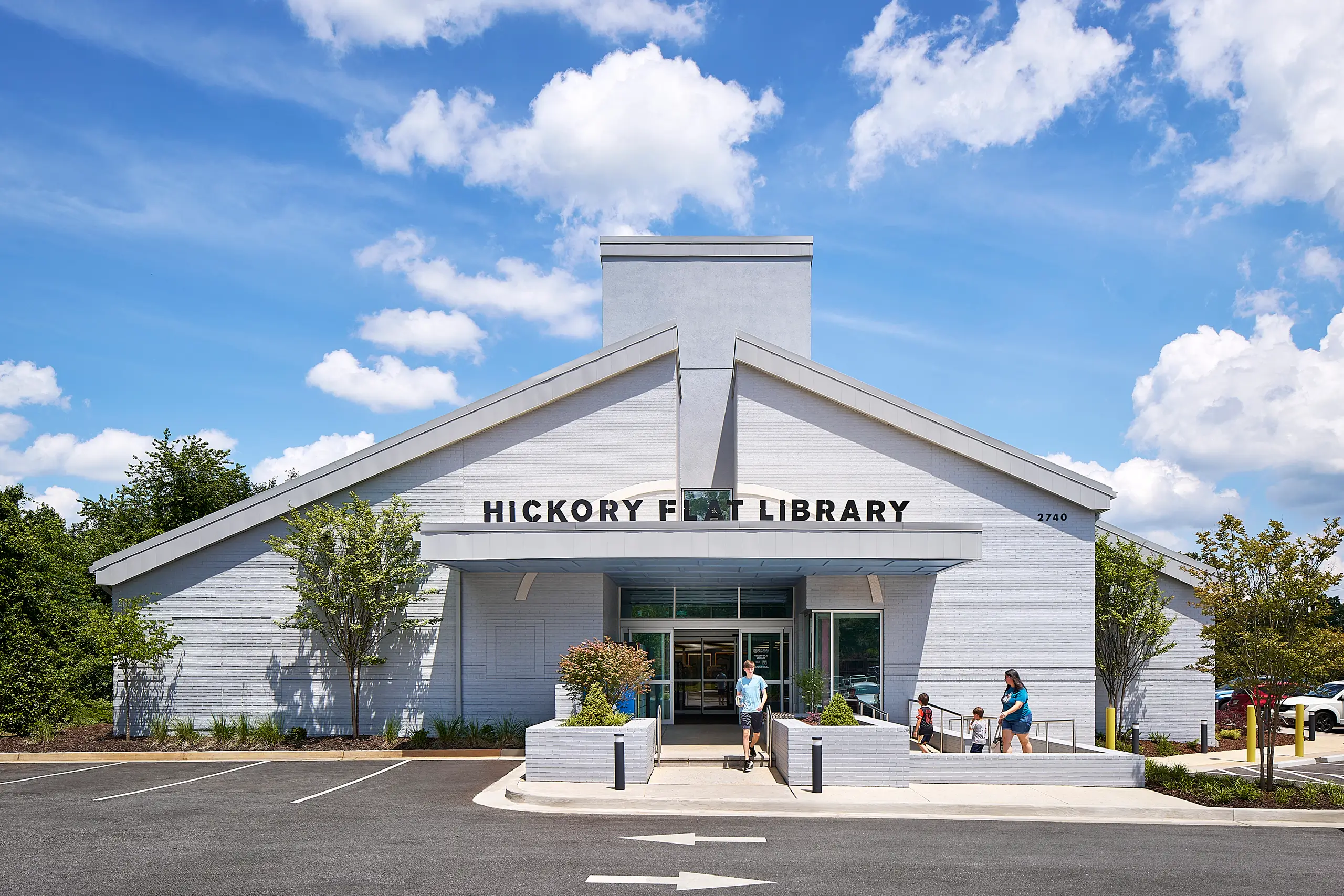
Front entry elevation: A postmodern Remix
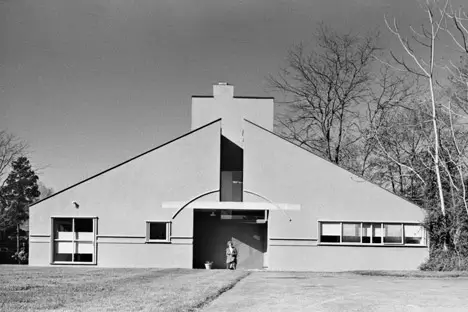
Robert Venturi the Vanna Venturi House, 1959,considered one of the first works of Postmodern Architecture
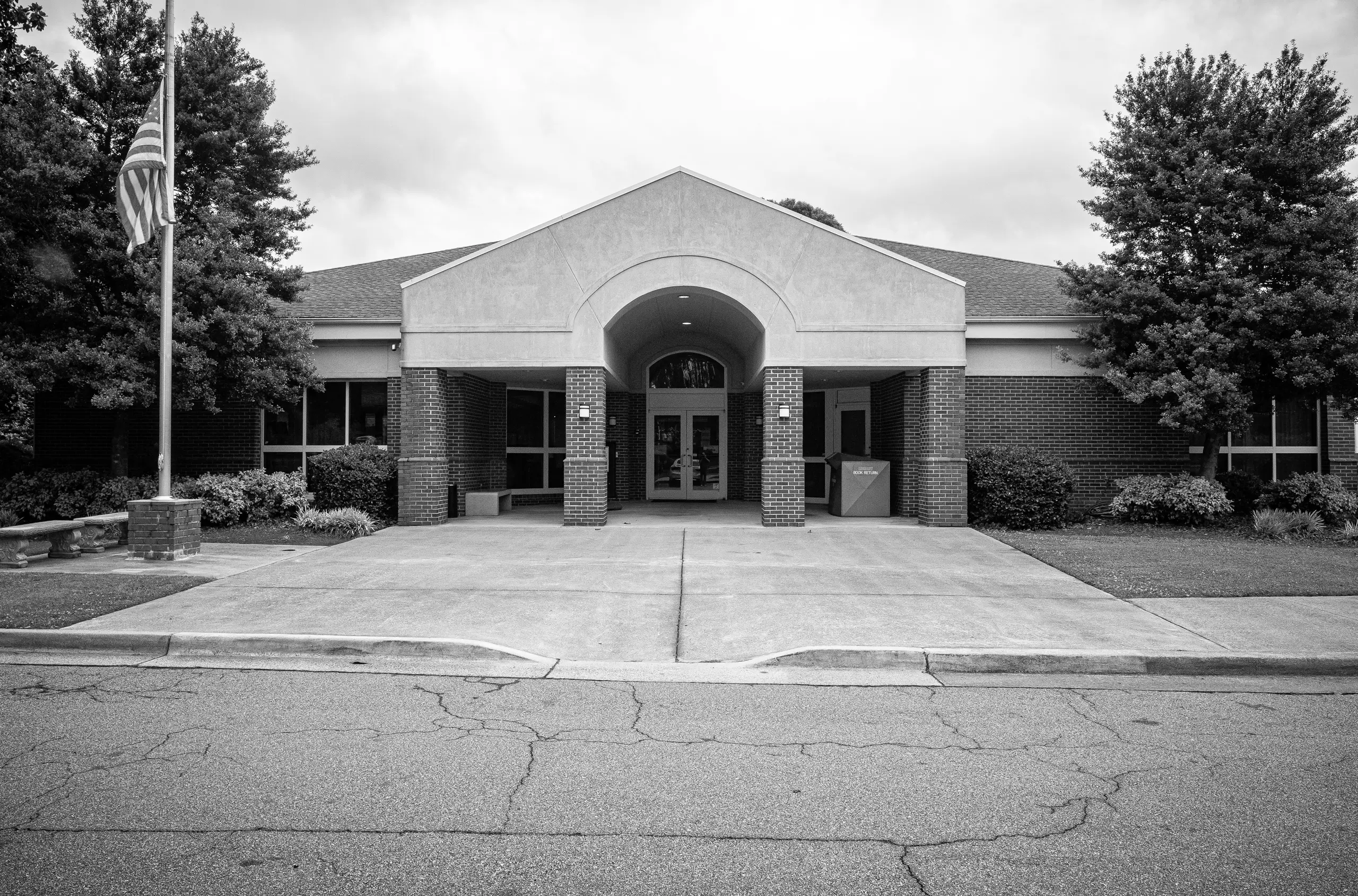
Before
Referencing and Reediting
The Hickory Flat Library embodies New Postmodern (PM2) architecture. Its front façade playfully reimagines Robert Venturi’s house for his mother shifting planes, altering windows, and distorting form as if the original had been passed through a copy machine and misaligned, resulting in a witty and dynamic composition The gray exterior palette recalls the black-and-white tonesimagery of architectural history, offering atongue-in-cheekreflection on how buildingsare remembered.
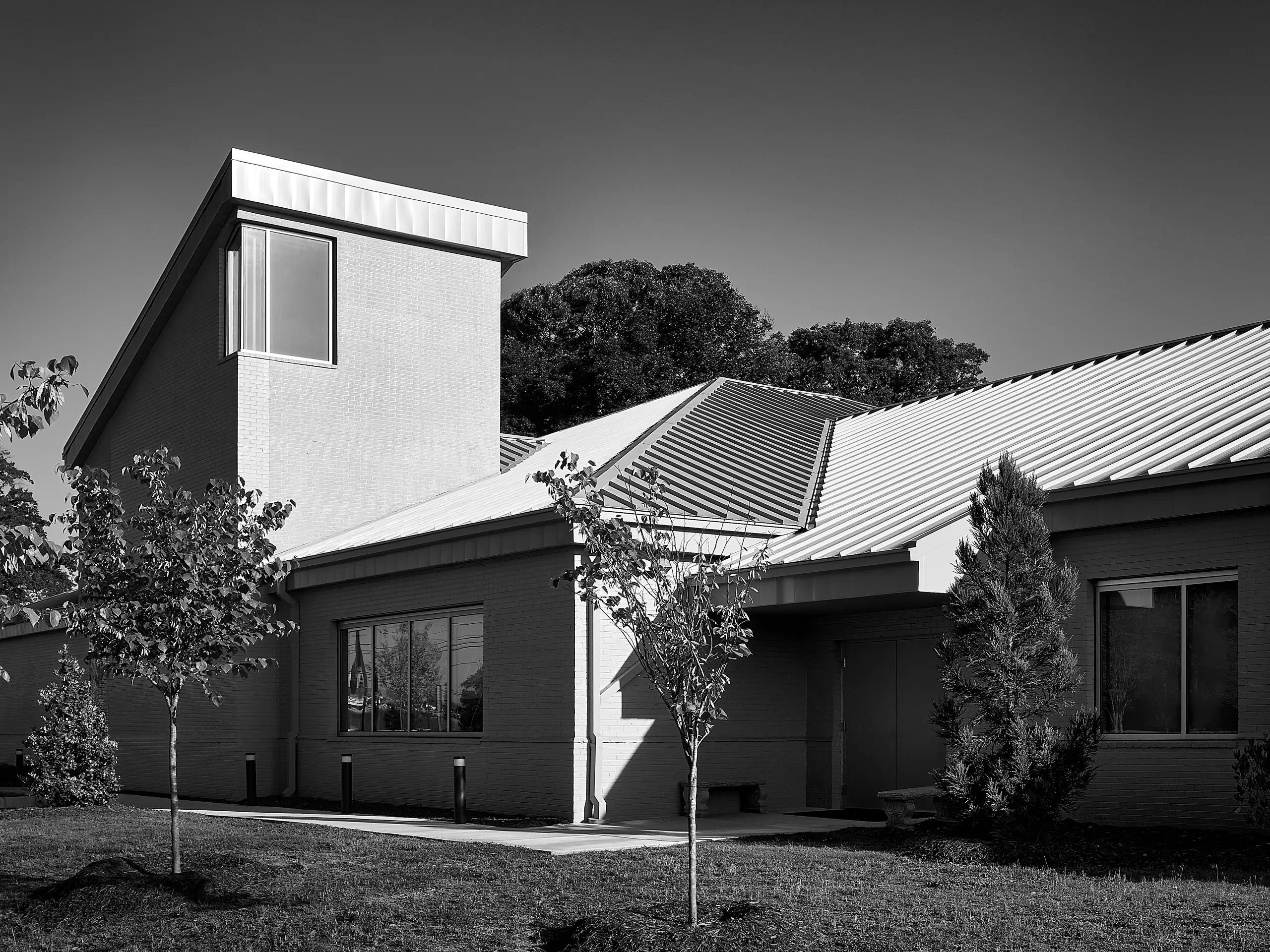
Side elevation
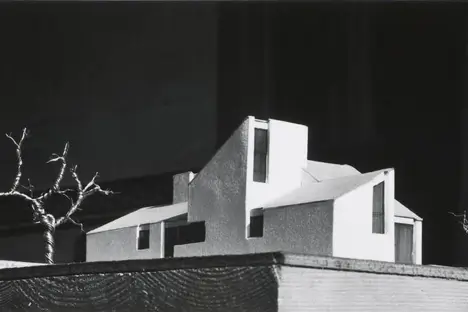
James Stirling House in North London, 1958

Before
Collage
The side elevation draws inspiration from James Stirling’s early work, specifically his 1958 unbuilt House in North London, known for its distinctive massing and stark gabled forms. The library adopts a similar architectural language—more sculptural than symbolic—arranging its volumes to emphasize asymmetry, layering, and tension. Tilted and intersecting rooflines, along with deliberately misaligned forms, echo the collage-like qualities of Stirling’s experiments, celebrating his skill at blending functionality with expressive drama.
Towers and Pop-Ups
Historically a symbol of entry and arrival, the tower anchors the library’s public face, while pop-up roof volumes project the Adult, Teen, and Children’s areas outward, reflecting the library’s interior life. Together, the tower and roof volumes form a series of distinct elements that reveal the building’s internal organization and reinforce its layered identity.
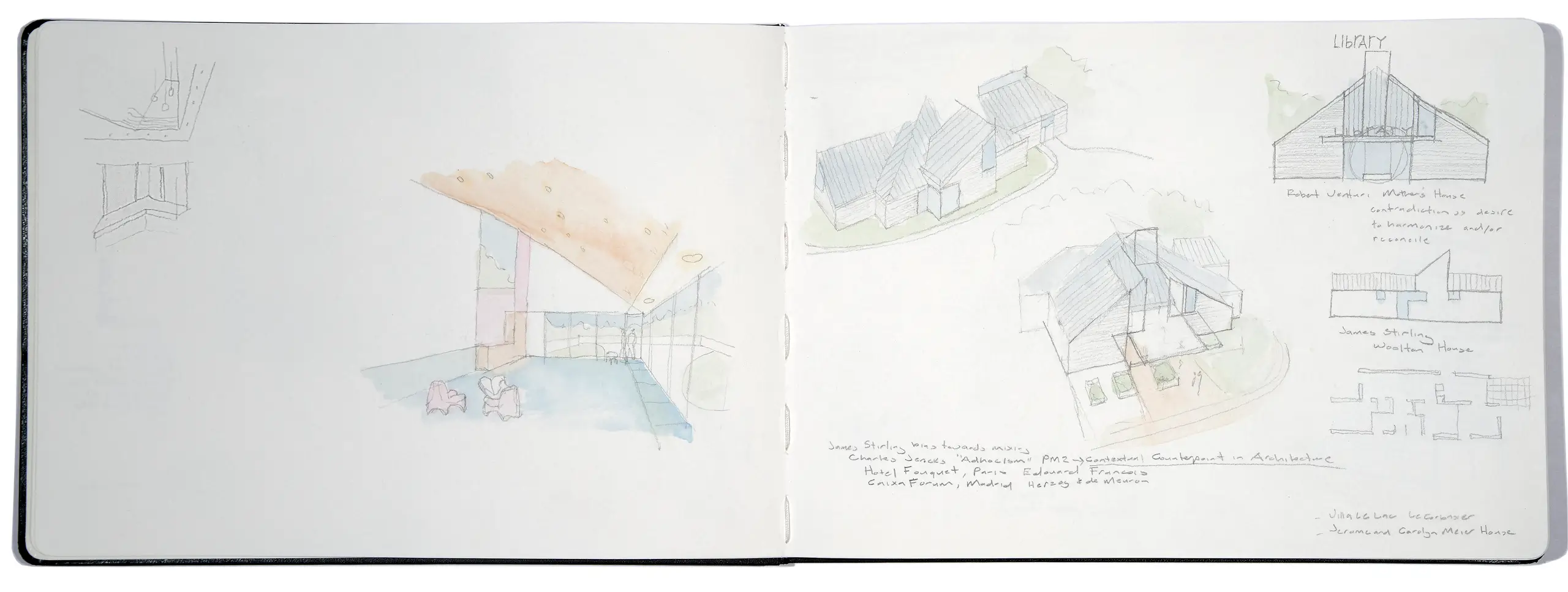
Early study of front elevation
Roofscape
The library’s roofline is designed to evoke the layered rooflines visible across the densely packed adjacent neighborhood.

Aerial
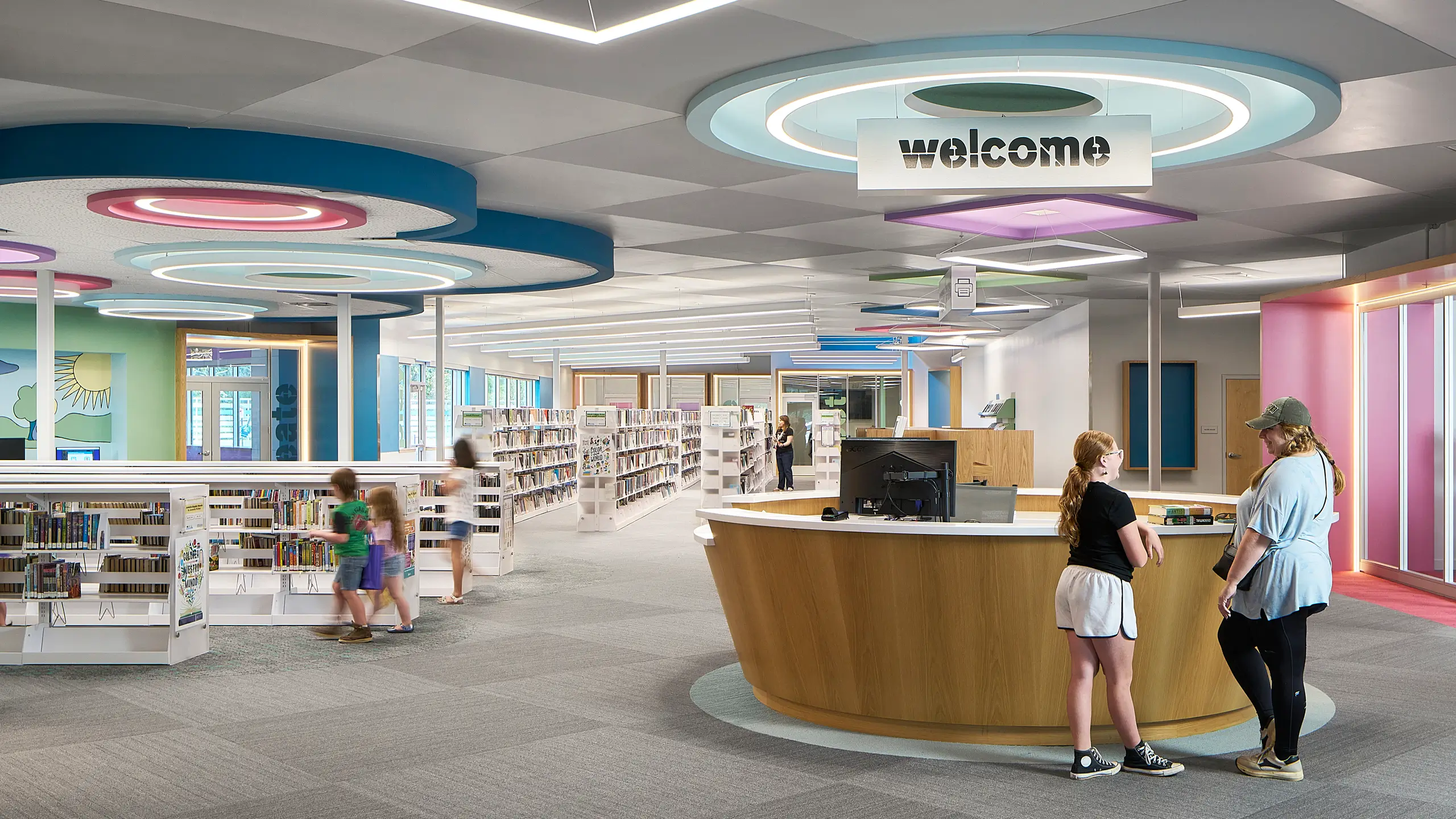
Circulation desk with 360 degree views of library
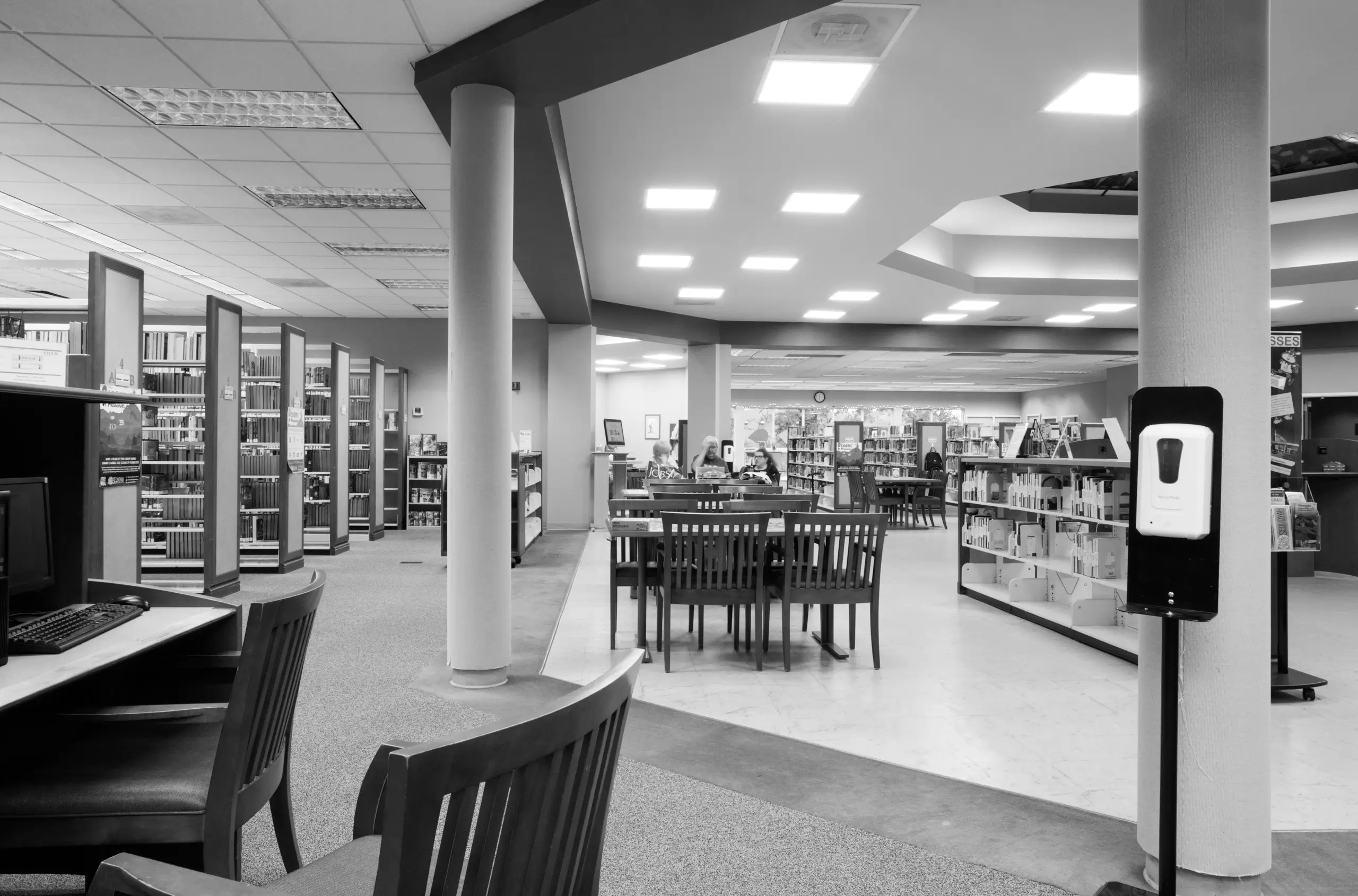
Before of interior of library
An intuitive, mall-inspired floor plan
The floor plan, inspired by a shopping mall, guides visitors intuitively through the space. A decompression zone at the entrance allows a moment of pause, while a central help desk provides 360-degree visibility. Lighted, colored portals mark major program areas—Third Place, Teens, Maker Space, Community Room, Conference Rooms, and Quiet Study—creating a vibrant rhythm of light, transparency, and color that animates the interior and directs movement.
Third Place
Third place
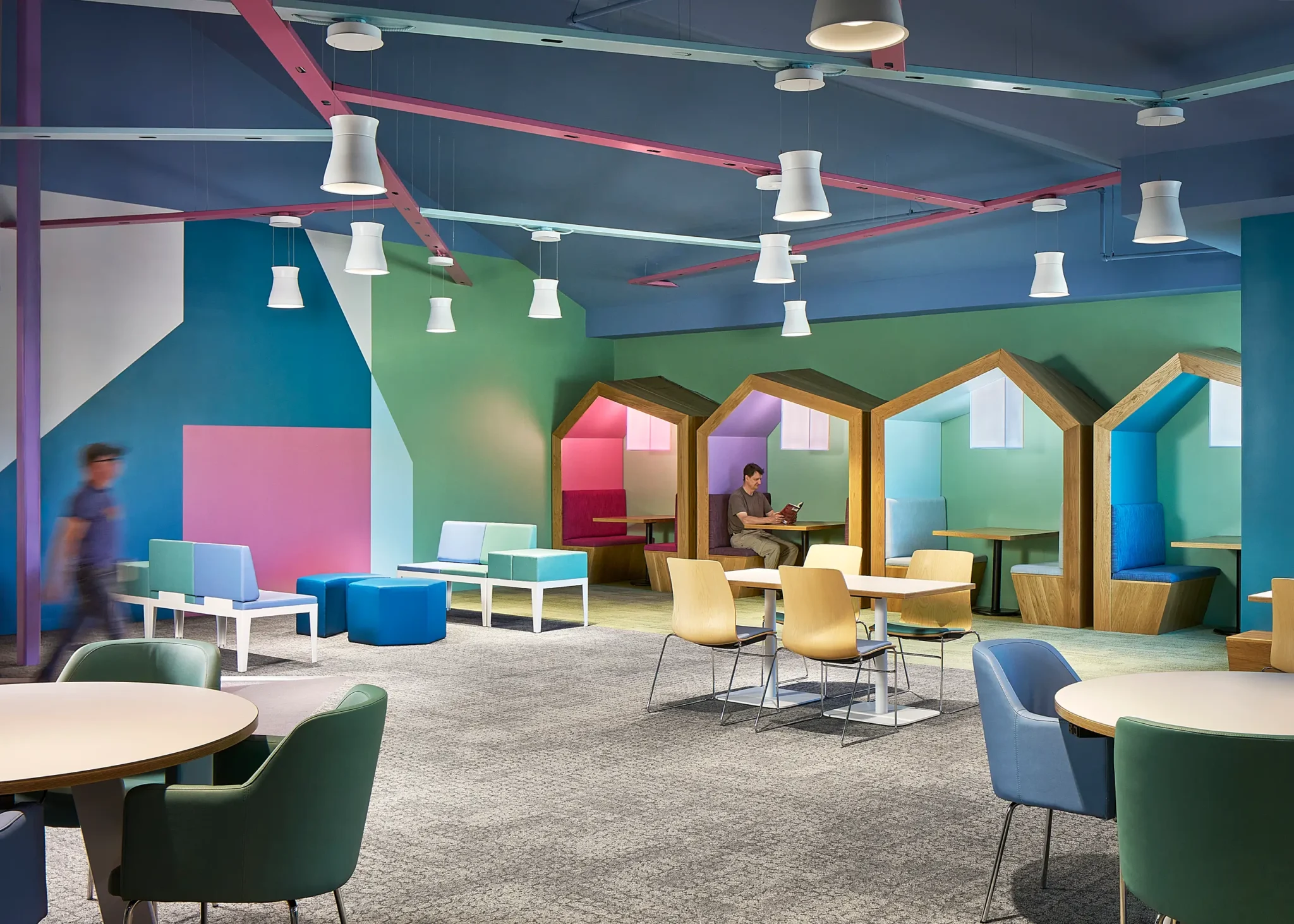
The library has carved out a dedicated space designed to serve as an incubator for self-directed programming. Outfitted with flexible furniture, the area supports a wide range of uses—whether it’s focused study, collaborative group work, or simply a place to hang out. What is a third place? Your first place is where you live. Your second is where you work or go to school. A third place is everything in between—a setting where no one is required to be, but where people choose to gather. Coffee shops, parks, bookstores, churches, community centers and librarys all qualify. These spaces are vital: they help us form identities, nurture relationships, and connect with our communities beyond the boundaries of home and work.
Spaces within spaces
In the Third Place, a painted fireplace—inspired by Venturi’s Vanna Venturi House—anchors the flexible space, encouraging gathering and informal interaction while serving as a modern-day hearth. Custom-designed booths with peaked roofs provide intimate zones for study, conversation, or quiet retreat, echoing the neighborhood’s gabled forms.

Robert Venturi the Vanna Venturi House, Fire place, 1959
Children's Area
Dream and discover
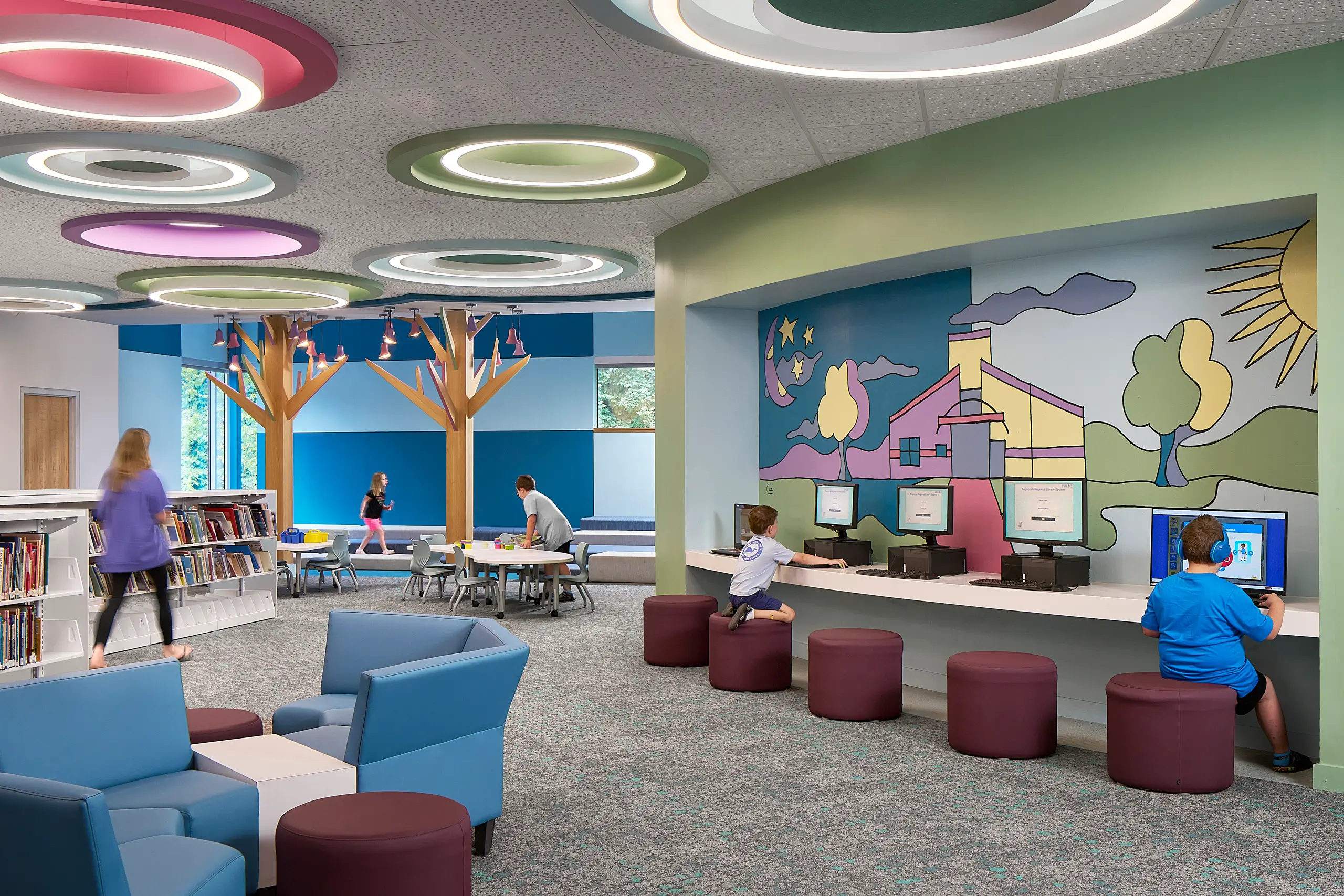
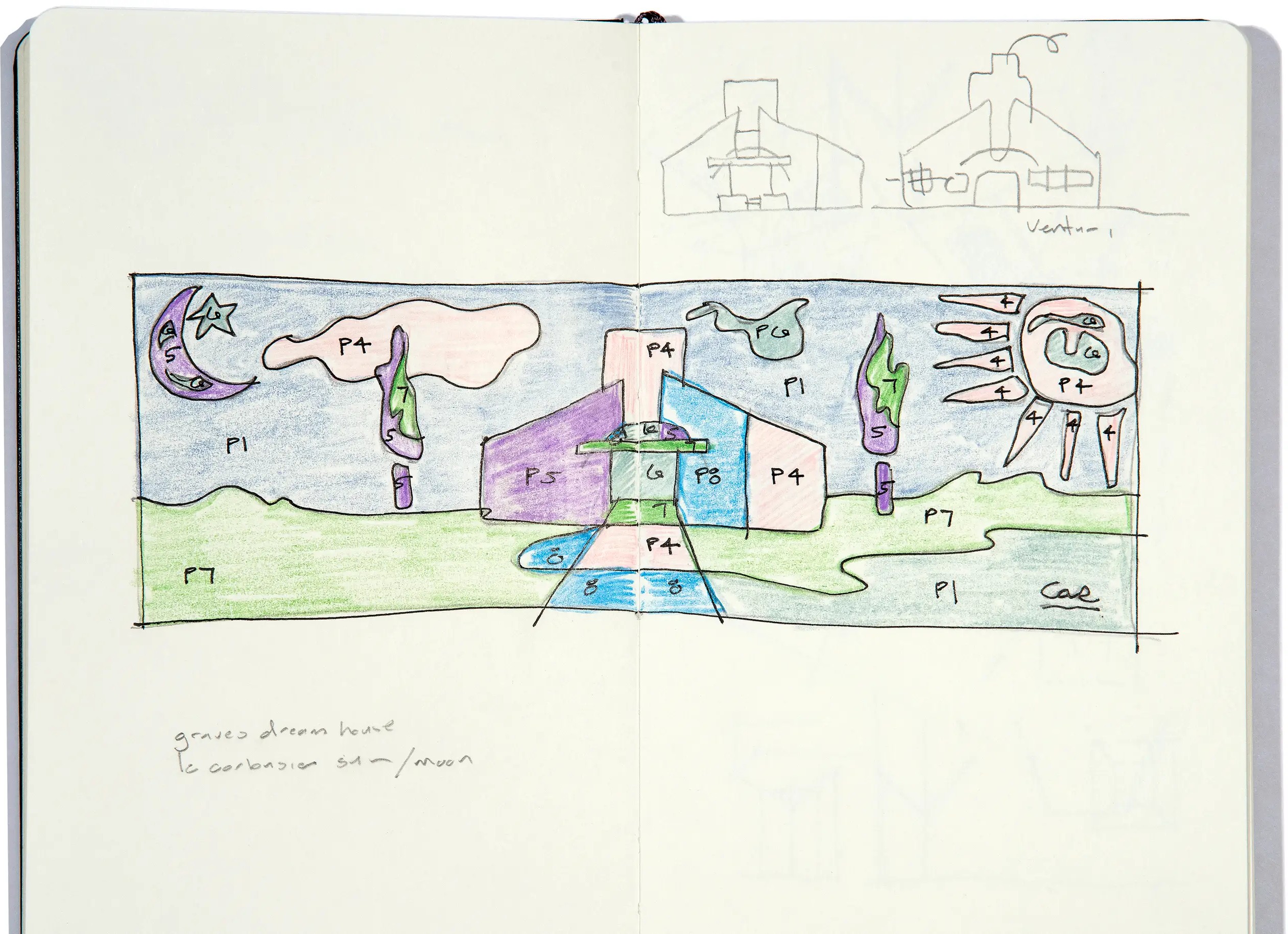
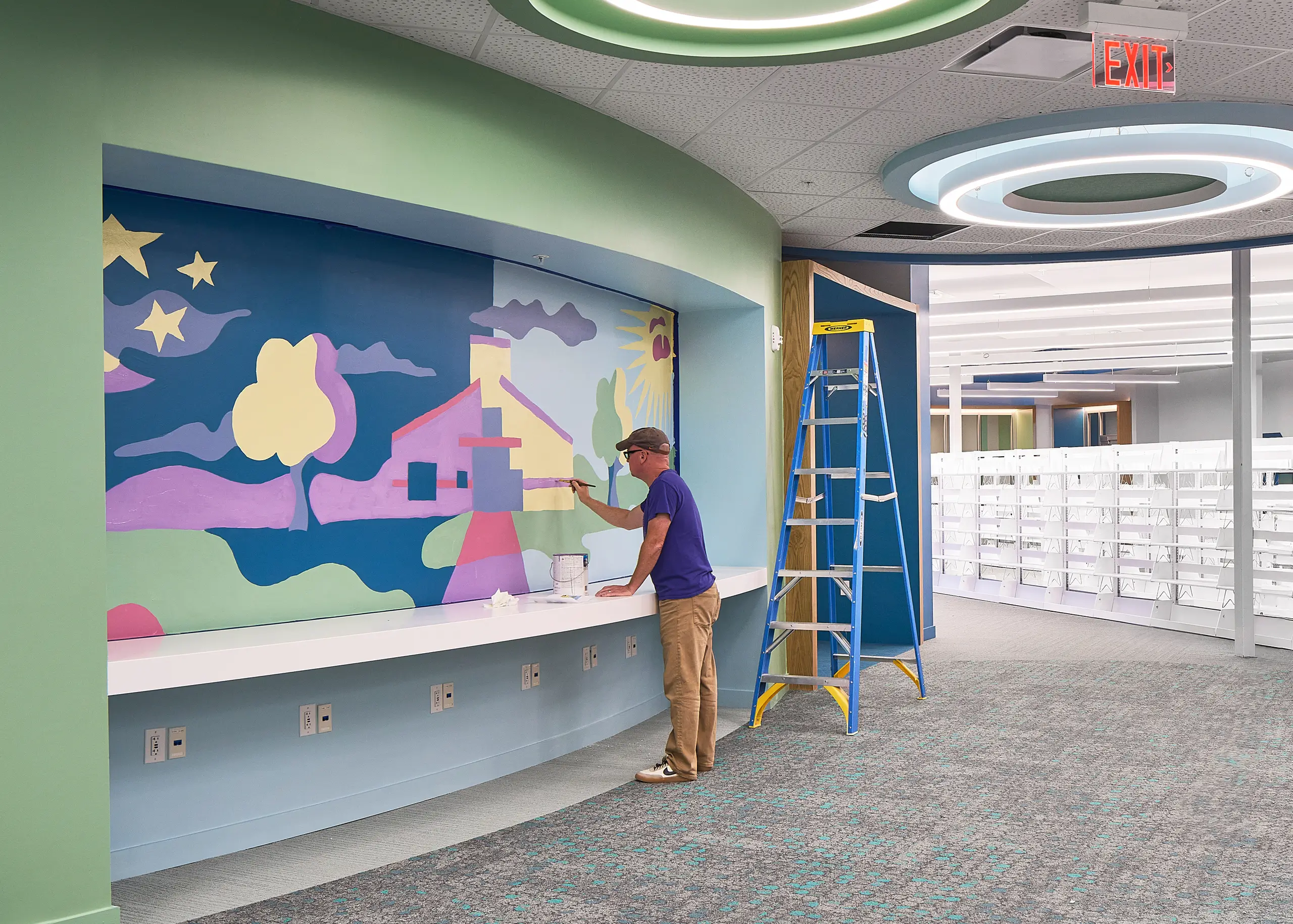
The redesigned children’s area is crafted entirely from a child’s perspective—welcoming, scaled for little ones, and vibrant with color. A lowered ceiling fosters a cozy, child-friendly sense of belonging, while circular ceiling features and playful lighting define the space as a unique destination within the library. At its center, a colorful, story-driven mural by the architect brings the walls to life, filling the room with imagination and warmth and creating a joyful environment where children feel seen, inspired, and free to explore.
Sketch of mural from Architect's notebook
Architect painting mural
Tower of tales
The Children’s Story Time Tower is a whimsical space designed to inspire imagination and engagement. Encircled by custom wooden trees, it evokes a playful forest, with raised seating that encourages shared storytelling. A ceiling constellation pattern and a calming nighttime-blue palette add a sense of magic, linking stories to the wider universe and inviting quiet exploration.
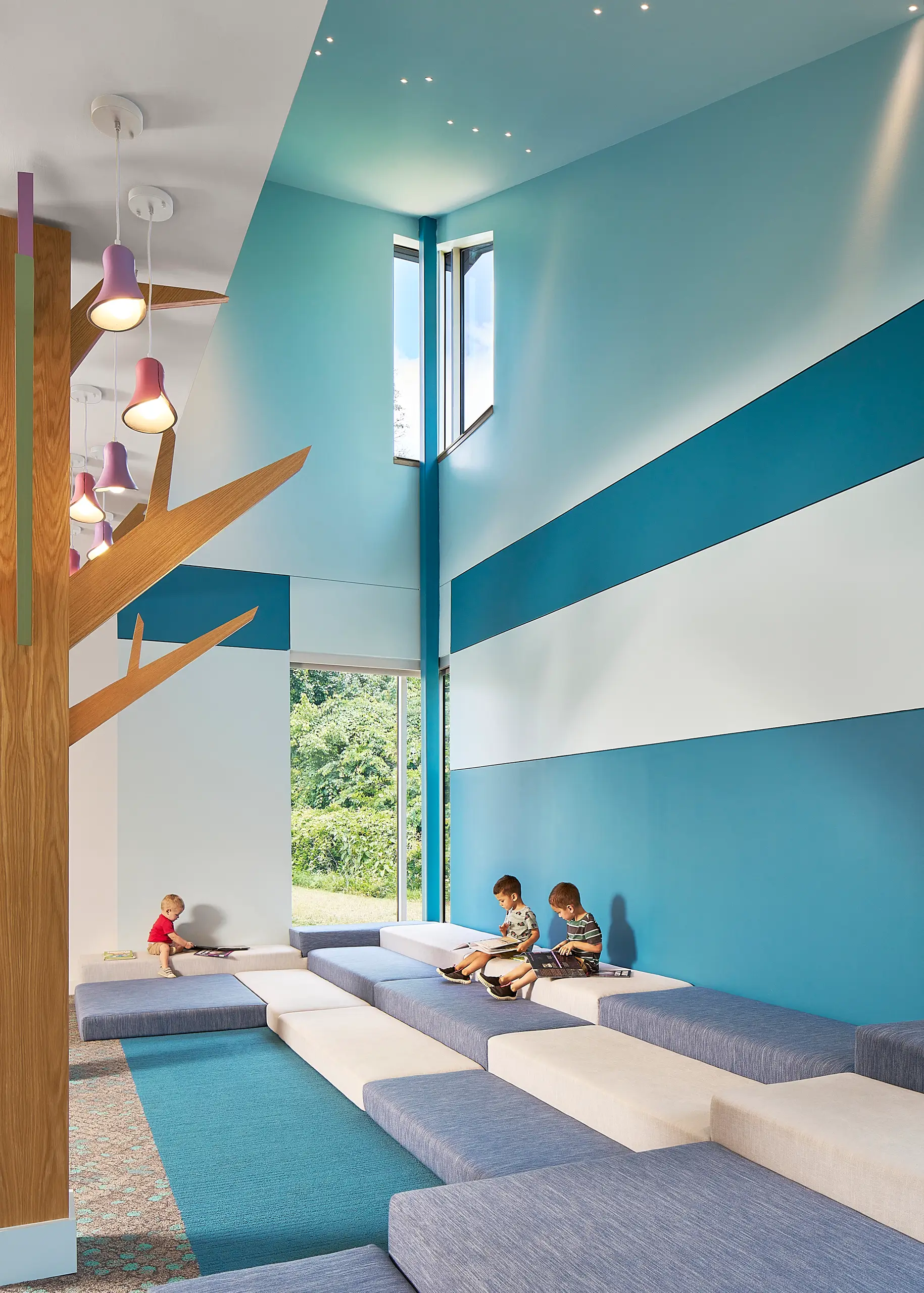
Story time

Maker Space
A Hub for Creativity
The library’s Maker Space fosters creativity and hands-on learning, with custom furniture that is flexible, durable, and visually tied to the overall design. These pieces enhance functionality while creating a seamless environment that invites exploration, experimentation, and collaboration.
A Hidden Haven for Play
The library’s exterior children’s play area is tucked into an underutilized corner, creating a safe, intimate space where kids can play while remaining visible to caregivers. Durable materials and playful elements encourage exploration and activity, while its proximity to the library connects indoor learning with outdoor play.
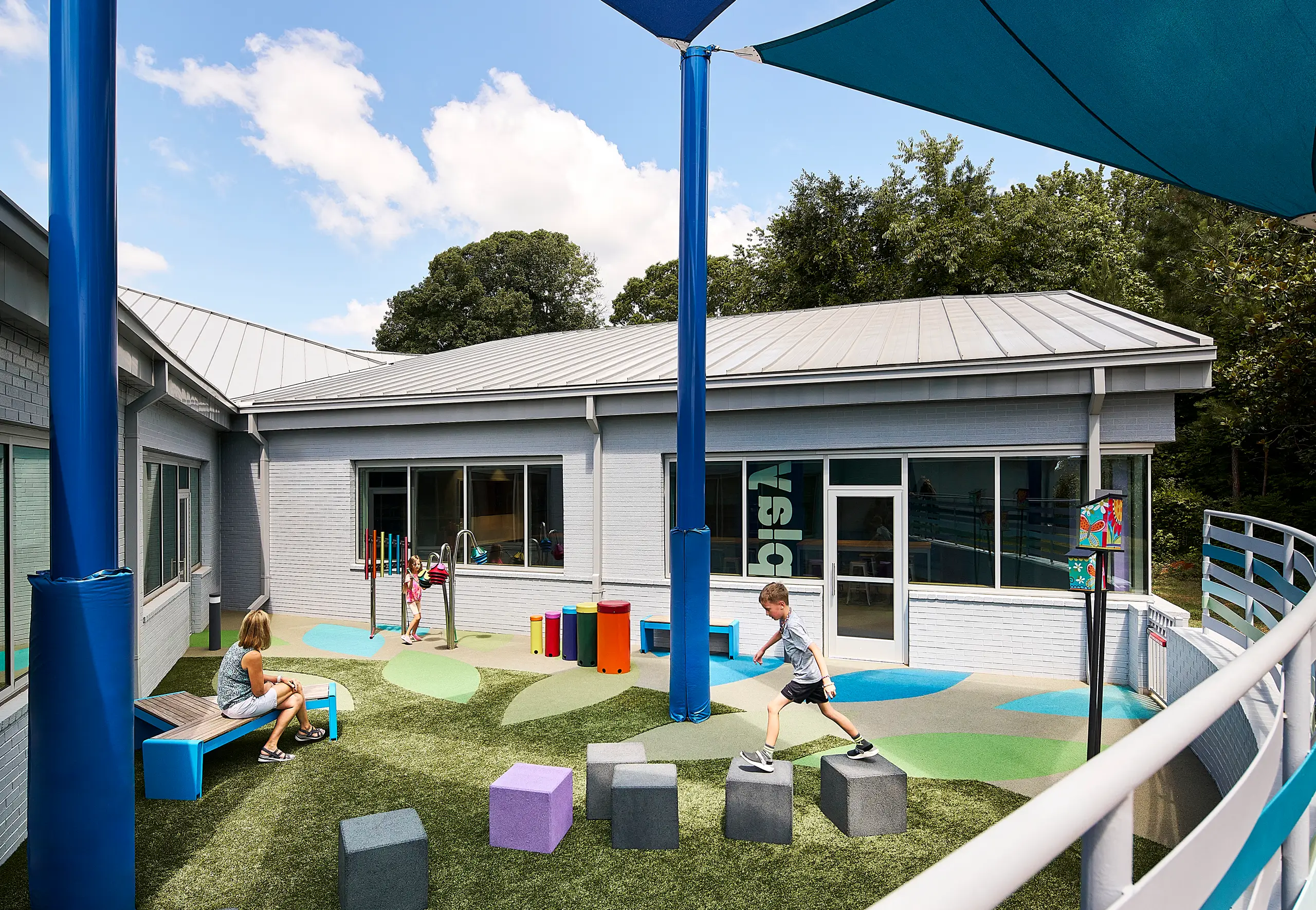
Children's escape garden

Adult tower
Color and movement: guiding the library experience
Warm wood portals, accented with color and lighting, guide movement and define transitions between activity zones. Cool colors in adult spaces create a calm, passive atmosphere, while warm colors in teen and children’s areas foster active, energetic engagement. Color thus signals function, influences mood, and shapes the overall experience.
S/M/L
The library serves the community with small, medium, and large meeting rooms, available for public use for clubs, activities, and study.
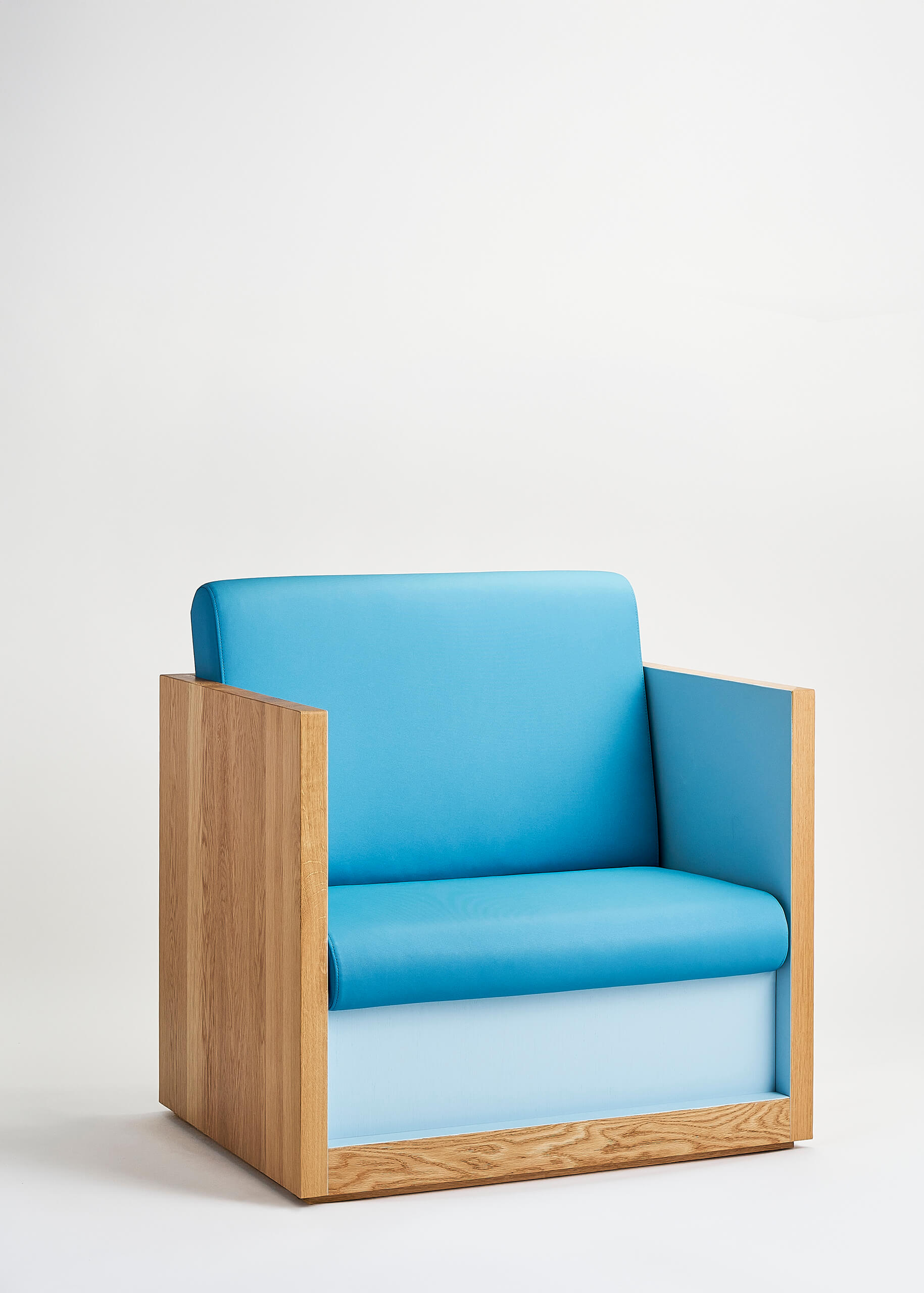


Square chair
Holistic environment
The Hickory Flat Library showcases custom furniture made from the same wood and colors as the building, creating a cohesive, immersive environment. Each piece reinforces the architectural language, seamlessly merging furniture with structure. Inspired by architects such as Frank Lloyd Wright and Michael Graves, the design treats furniture as an integral extension of the architecture.
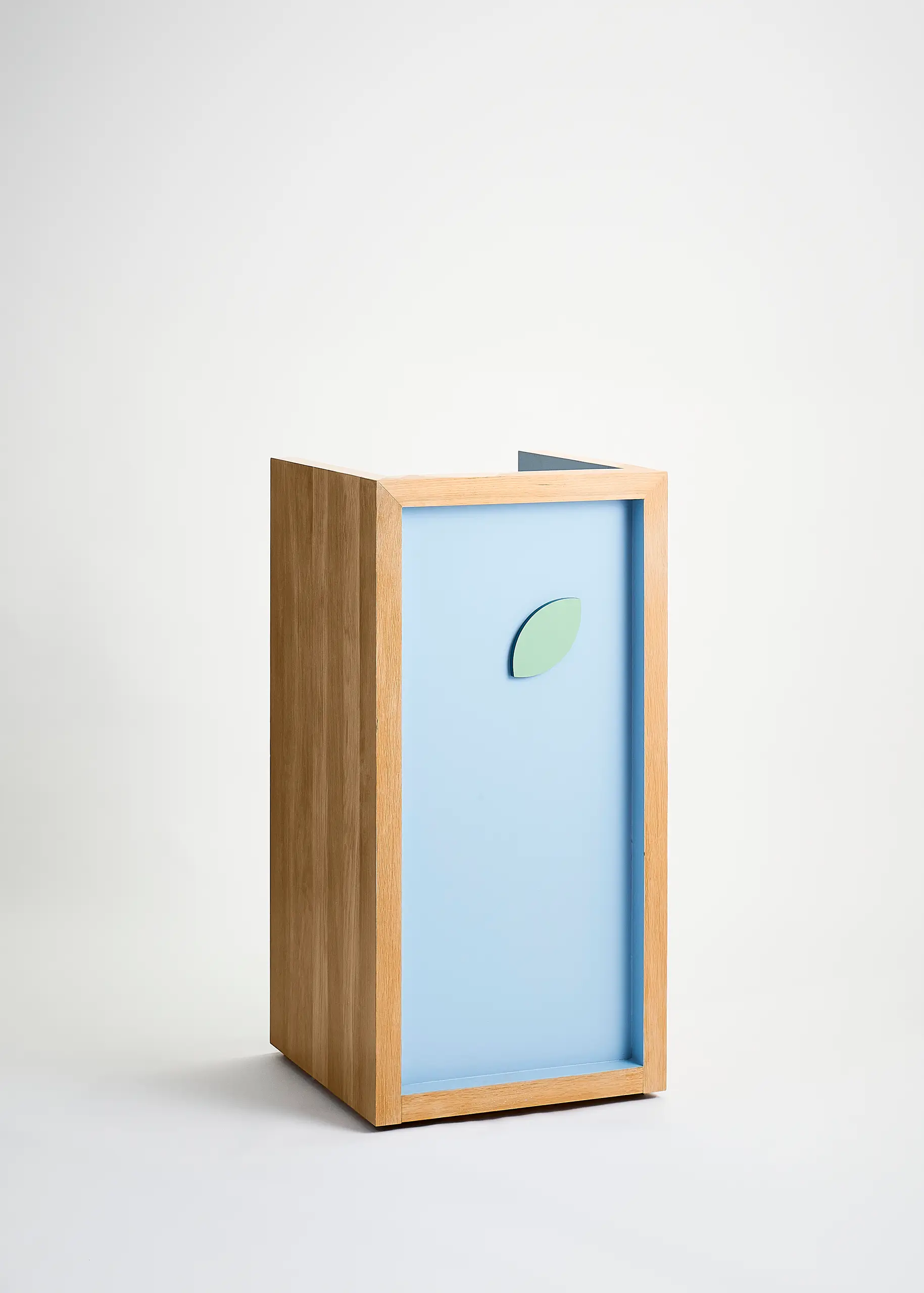
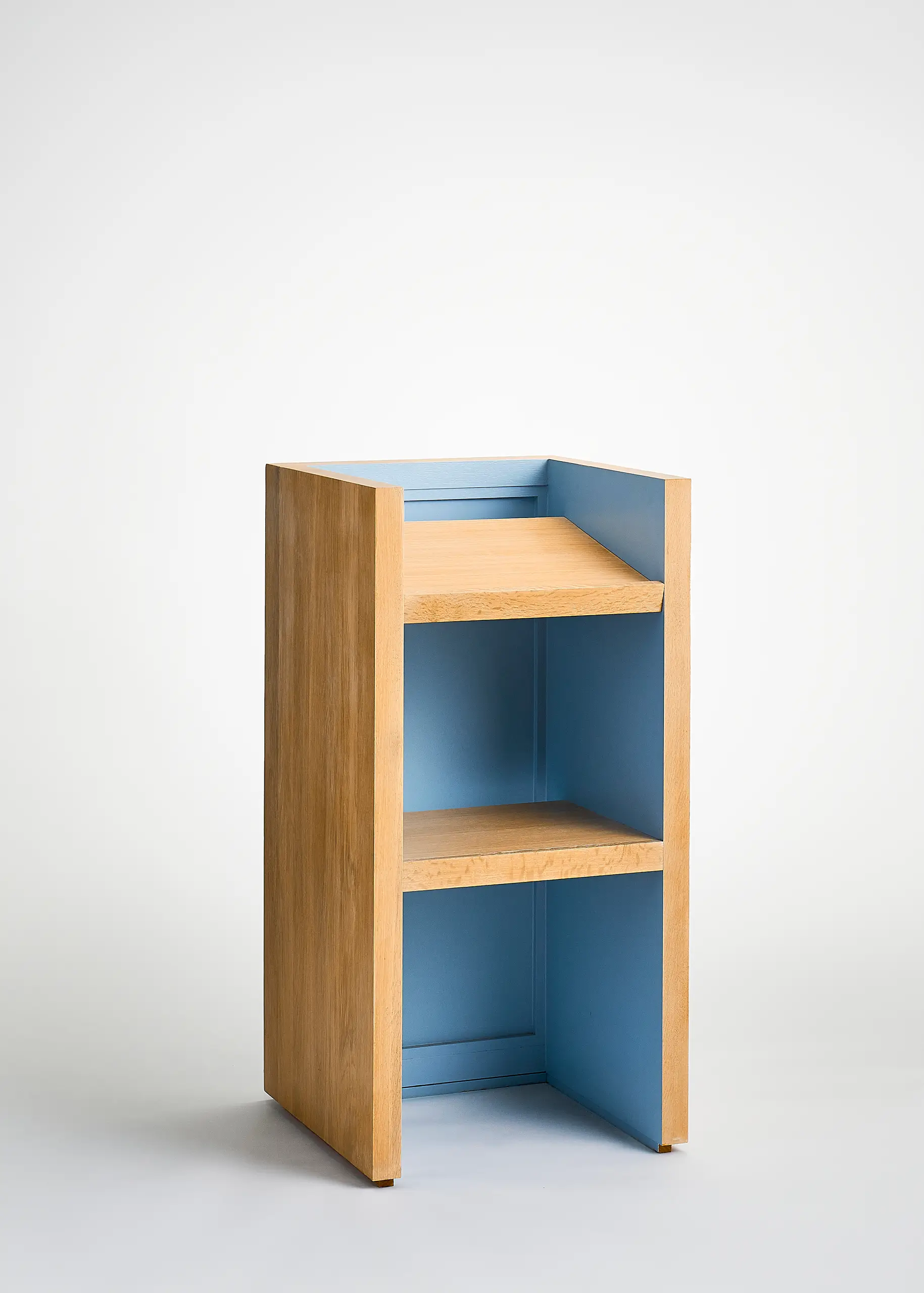
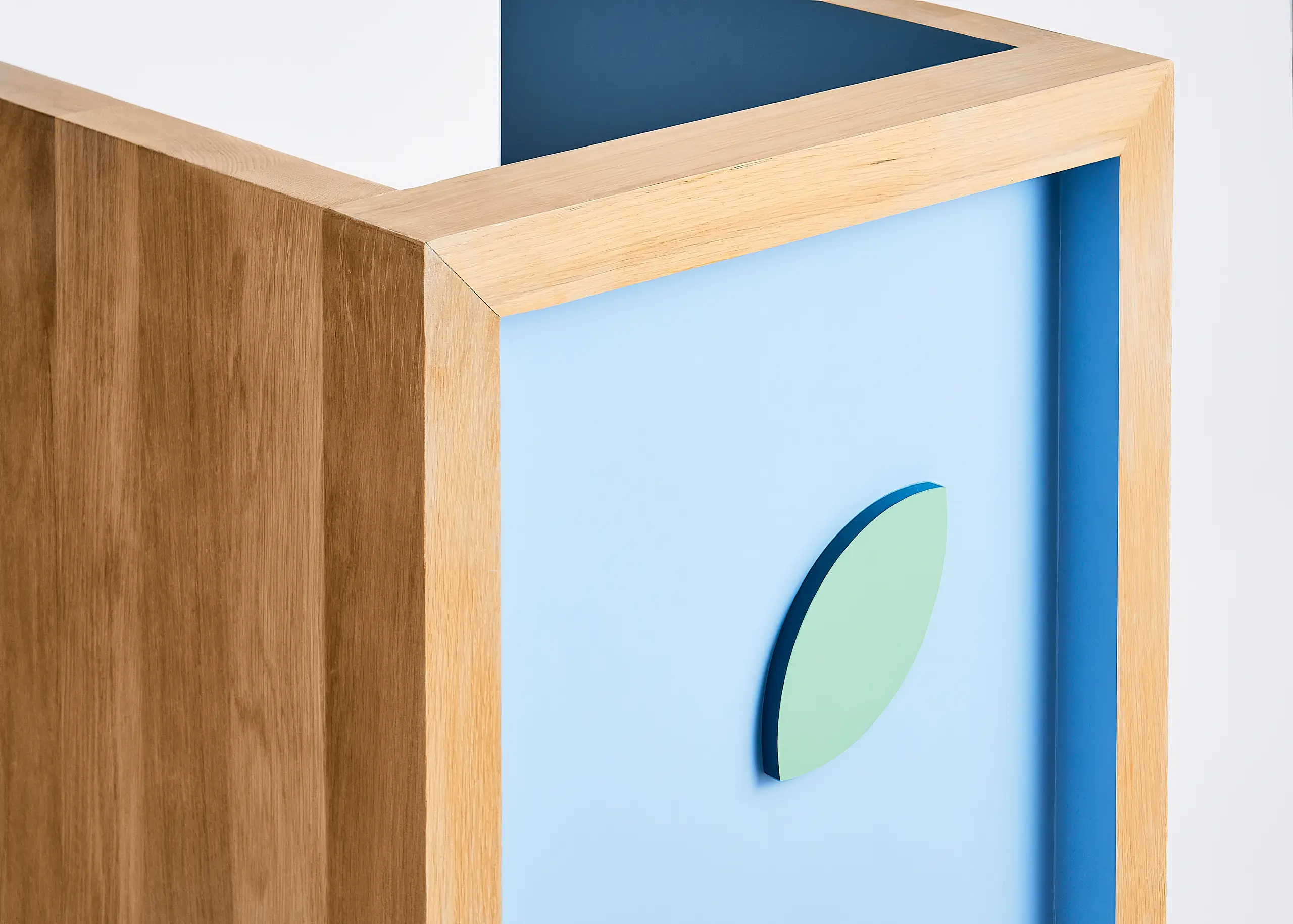
Lectern
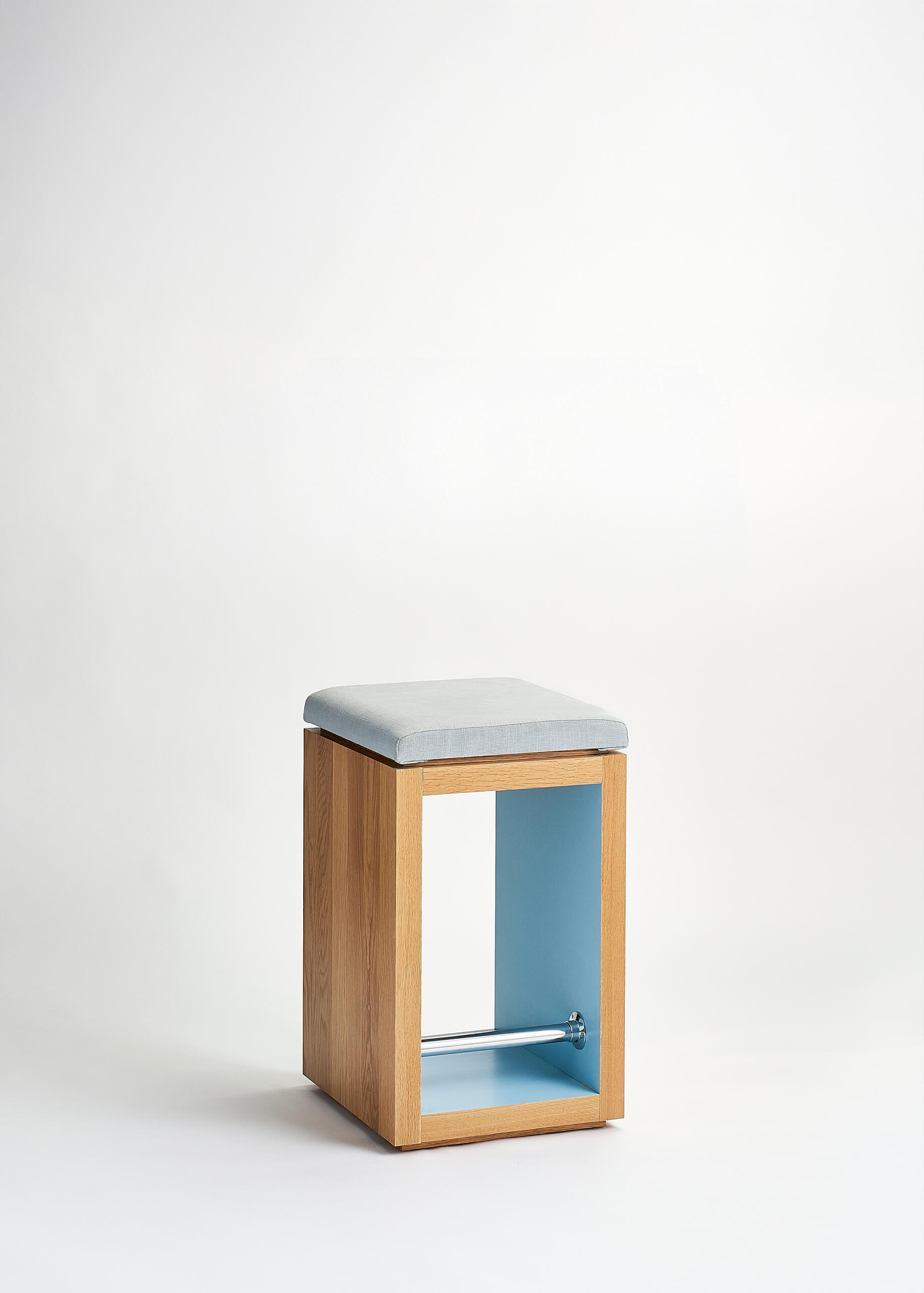
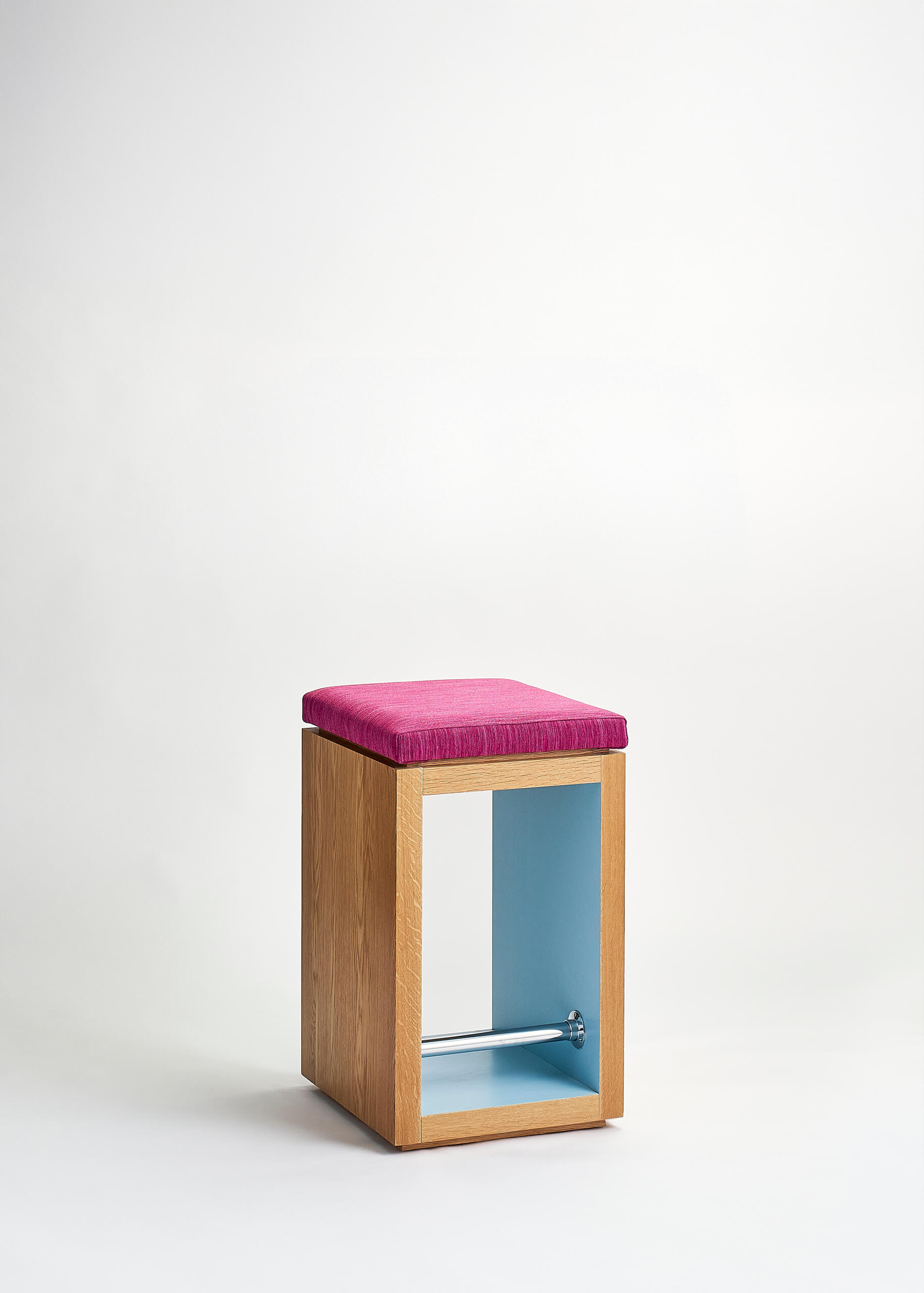
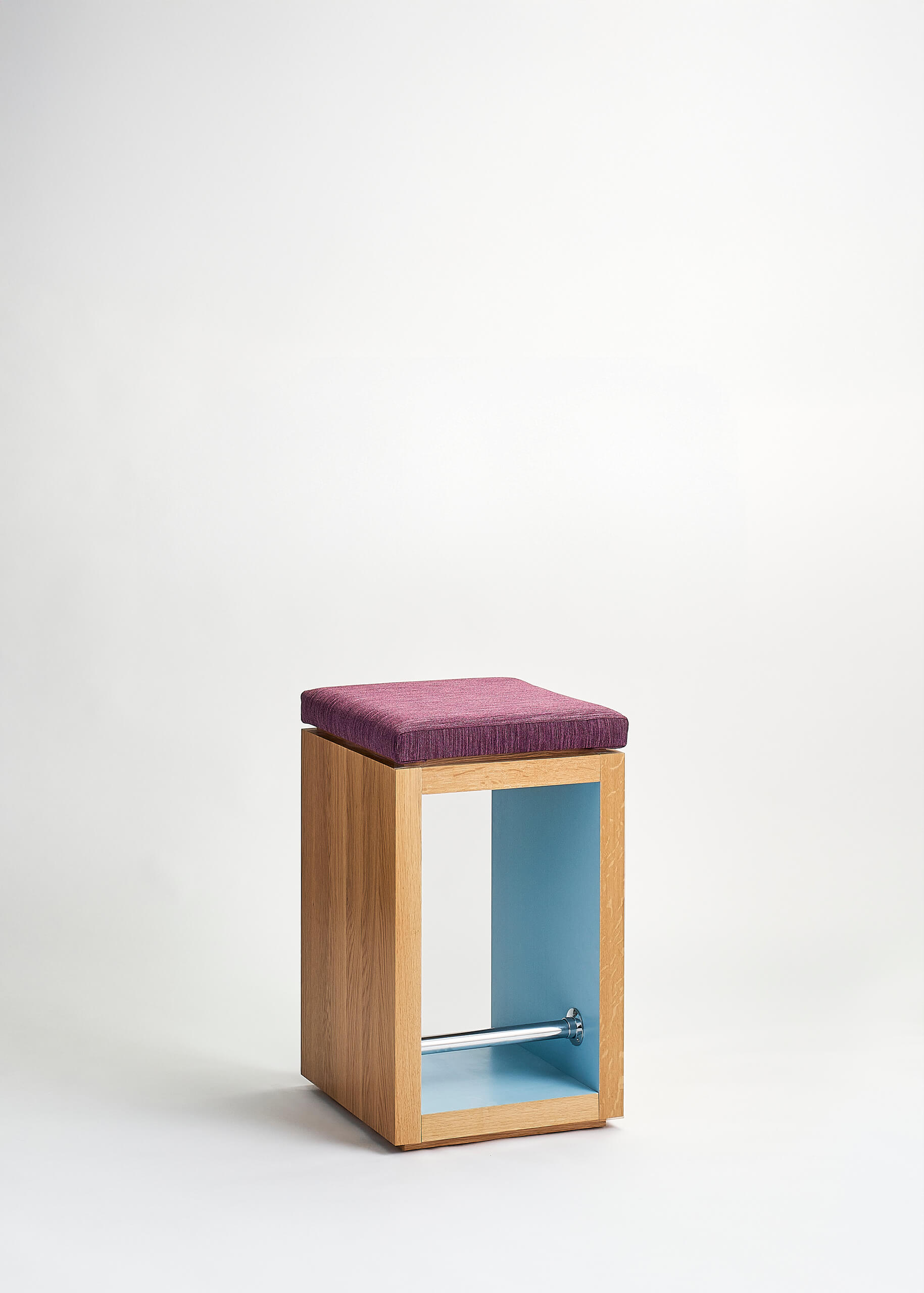

Square stool
Front entry elevation: A postmodern Remix
Robert Venturi the Vanna Venturi House, 1959,considered one of the first works of Postmodern Architecture
Before
Referencing and Reediting
The Hickory Flat Library embodies New Postmodern (PM2) architecture. Its front façade playfully reimagines Robert Venturi’s house for his mother shifting planes, altering windows, and distorting form as if the original had been passed through a copy machine and misaligned, resulting in a witty and dynamic composition The gray exterior palette recalls the black-and-white tonesimagery of architectural history, offering atongue-in-cheekreflection on how buildingsare remembered.
Side elevation
James Stirling House in North London, 1958
Before
Collage
The side elevation draws inspiration from James Stirling’s early work, specifically his 1958 unbuilt House in North London, known for its distinctive massing and stark gabled forms. The library adopts a similar architectural language—more sculptural than symbolic—arranging its volumes to emphasize asymmetry, layering, and tension. Tilted and intersecting rooflines, along with deliberately misaligned forms, echo the collage-like qualities of Stirling’s experiments, celebrating his skill at blending functionality with expressive drama.
Towers and Pop-Ups
Historically a symbol of entry and arrival, the tower anchors the library’s public face, while pop-up roof volumes project the Adult, Teen, and Children’s areas outward, reflecting the library’s interior life. Together, the tower and roof volumes form a series of distinct elements that reveal the building’s internal organization and reinforce its layered identity.
Early study of front elevation
Roofscape
The library’s roofline is designed to evoke the layered rooflines visible across the densely packed adjacent neighborhood.
Aerial
Circulation desk with 360 degree views of library
Before of interior of library
An intuitive, mall-inspired floor plan
The floor plan, inspired by a shopping mall, guides visitors intuitively through the space. A decompression zone at the entrance allows a moment of pause, while a central help desk provides 360-degree visibility. Lighted, colored portals mark major program areas—Third Place, Teens, Maker Space, Community Room, Conference Rooms, and Quiet Study—creating a vibrant rhythm of light, transparency, and color that animates the interior and directs movement.
Third Place
Third place
The library has carved out a dedicated space designed to serve as an incubator for self-directed programming. Outfitted with flexible furniture, the area supports a wide range of uses—whether it’s focused study, collaborative group work, or simply a place to hang out. What is a third place? Your first place is where you live. Your second is where you work or go to school. A third place is everything in between—a setting where no one is required to be, but where people choose to gather. Coffee shops, parks, bookstores, churches, community centers and librarys all qualify. These spaces are vital: they help us form identities, nurture relationships, and connect with our communities beyond the boundaries of home and work.
Spaces within spaces
In the Third Place, a painted fireplace—inspired by Venturi’s Vanna Venturi House—anchors the flexible space, encouraging gathering and informal interaction while serving as a modern-day hearth. Custom-designed booths with peaked roofs provide intimate zones for study, conversation, or quiet retreat, echoing the neighborhood’s gabled forms.
Robert Venturi the Vanna Venturi House, Fire place, 1959
Children's Area
Dream and discover
The redesigned children’s area is crafted entirely from a child’s perspective—welcoming, scaled for little ones, and vibrant with color. A lowered ceiling fosters a cozy, child-friendly sense of belonging, while circular ceiling features and playful lighting define the space as a unique destination within the library. At its center, a colorful, story-driven mural by the architect brings the walls to life, filling the room with imagination and warmth and creating a joyful environment where children feel seen, inspired, and free to explore.
Sketch of mural from Architect's notebook
Architect painting mural
Tower of tales
The Children’s Story Time Tower is a whimsical space designed to inspire imagination and engagement. Encircled by custom wooden trees, it evokes a playful forest, with raised seating that encourages shared storytelling. A ceiling constellation pattern and a calming nighttime-blue palette add a sense of magic, linking stories to the wider universe and inviting quiet exploration.
Story time
Maker Space
A Hub for Creativity
The library’s Maker Space fosters creativity and hands-on learning, with custom furniture that is flexible, durable, and visually tied to the overall design. These pieces enhance functionality while creating a seamless environment that invites exploration, experimentation, and collaboration.
A Hidden Haven for Play
The library’s exterior children’s play area is tucked into an underutilized corner, creating a safe, intimate space where kids can play while remaining visible to caregivers. Durable materials and playful elements encourage exploration and activity, while its proximity to the library connects indoor learning with outdoor play.
Children's escape garden
Adult tower
Color and movement: guiding the library experience
Warm wood portals, accented with color and lighting, guide movement and define transitions between activity zones. Cool colors in adult spaces create a calm, passive atmosphere, while warm colors in teen and children’s areas foster active, energetic engagement. Color thus signals function, influences mood, and shapes the overall experience.
S/M/L
The library serves the community with small, medium, and large meeting rooms, available for public use for clubs, activities, and study.
Square chair
Holistic environment
The Hickory Flat Library showcases custom furniture made from the same wood and colors as the building, creating a cohesive, immersive environment. Each piece reinforces the architectural language, seamlessly merging furniture with structure. Inspired by architects such as Frank Lloyd Wright and Michael Graves, the design treats furniture as an integral extension of the architecture.
Lectern
Square stool
Let’s collaborate
Have a design need?
We’d love to see how we can help.